Prompting guide
How to Write a Focused AI Book Cover Prompt
Translate a book's promise into a concise cover brief with a clear subject, genre signal, composition, and space for typography.
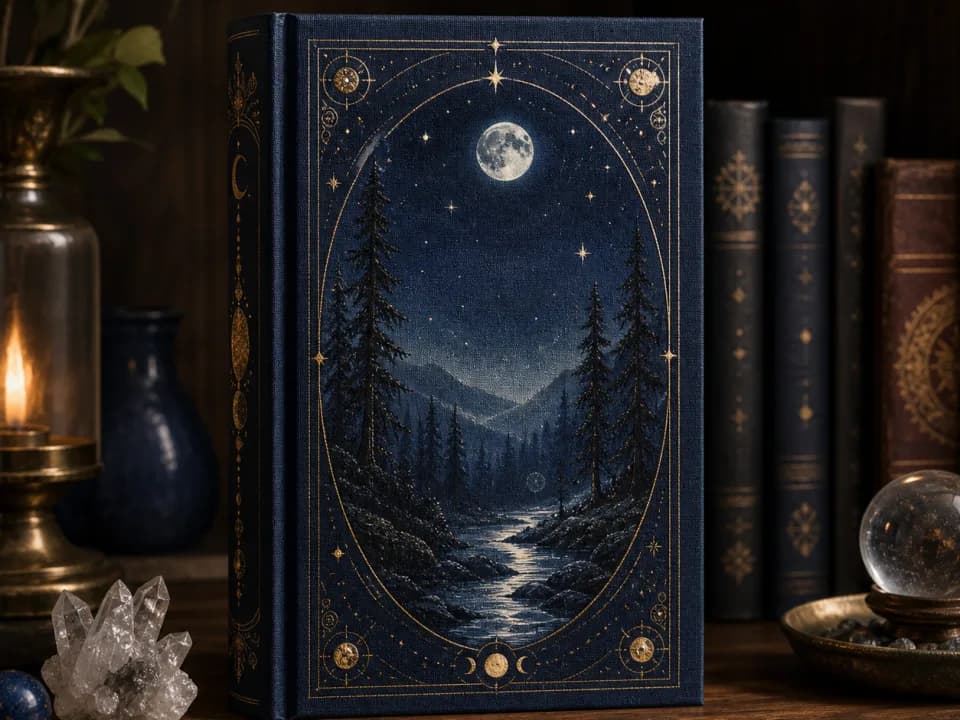
A useful book cover prompt is closer to an art-direction brief than a plot summary. It identifies the promise a reader should feel, chooses one visual metaphor, and gives the image enough structure to leave room for title and author typography.
Start with the shelf-level promise
Ask what a reader should understand in two seconds. A cozy mystery might promise charm with a hint of danger. A business book might promise clarity and forward motion. A literary novel might lead with atmosphere rather than a literal scene.
Write that promise in plain language before choosing visual details. It becomes the test for every later decision: if an element does not reinforce the promise, it probably does not belong on the cover.
Choose one visual concept
Plot summaries produce crowded prompts because every character and event feels important. Covers work better when they compress the story into one dominant image. Choose a character, object, place, or metaphor that can carry the emotional weight alone.
For example, replace a list of fantasy events with: a tiny illuminated doorway cut into an enormous black mountain, viewed from below. The concept implies scale, mystery, and a threshold without illustrating an entire chapter.
Add genre signals deliberately
Readers use visual conventions to categorize a book quickly. Describe the cues that matter for your genre:
| Decision | Example direction |
|---|---|
| Palette | muted earth tones with one ember-orange accent |
| Lighting | soft domestic window light or hard cinematic rim light |
| Texture | tactile paper grain, clean vector shapes, or painterly detail |
| Camera | intimate close-up, distant landscape, or symmetrical still life |
Use conventions as orientation, not a recipe. One distinctive choice inside a recognizable genre frame is often more memorable than rejecting every convention at once.
Reserve space for real typography
A book cover generator is useful for artwork, but cover titles need controlled, editable type. Tell the composition where to leave calm negative space: an open upper third, an uncluttered sky, a dark wall, or a centered area with low detail.
Do not ask the image model to render the final title. Add typography later in a design tool so spelling, hierarchy, kerning, and print margins stay under your control.
Assemble the prompt in layers
A practical prompt order is:
- Format and purpose: vertical book cover artwork.
- Dominant concept: the one subject or metaphor.
- Composition: camera angle, placement, and negative space.
- Genre treatment: palette, lighting, texture, and mood.
- Exclusions: no lettering, no watermark, no decorative border unless required.
This order keeps the goal visible and makes individual directions easy to revise.
Evaluate covers as a series
Compare three to five variations at thumbnail size. Look for immediate genre recognition, one clear focal point, and enough quiet space for the title. Then place sample typography over the strongest options. Artwork that looks impressive alone may fail once the actual title and author name are added.
The winning cover is not necessarily the most detailed image. It is the composition that makes the book's promise clearest while leaving the designer room to finish the job.