Status
04 assets / checked against brief

Give your agent the brief. Dream Pixel Forge plans the campaign, generates the assets, and checks every result before launch.
04 assets / checked against brief
01 / System consistency
Dream Pixel Forge keeps every asset aligned to your mission reality—from hardware and operations to tone, color, and typography.
02 / Plan
Name the outcome, audience, and constraints. Your agent turns that into a campaign plan before spending a credit.
03 / Make
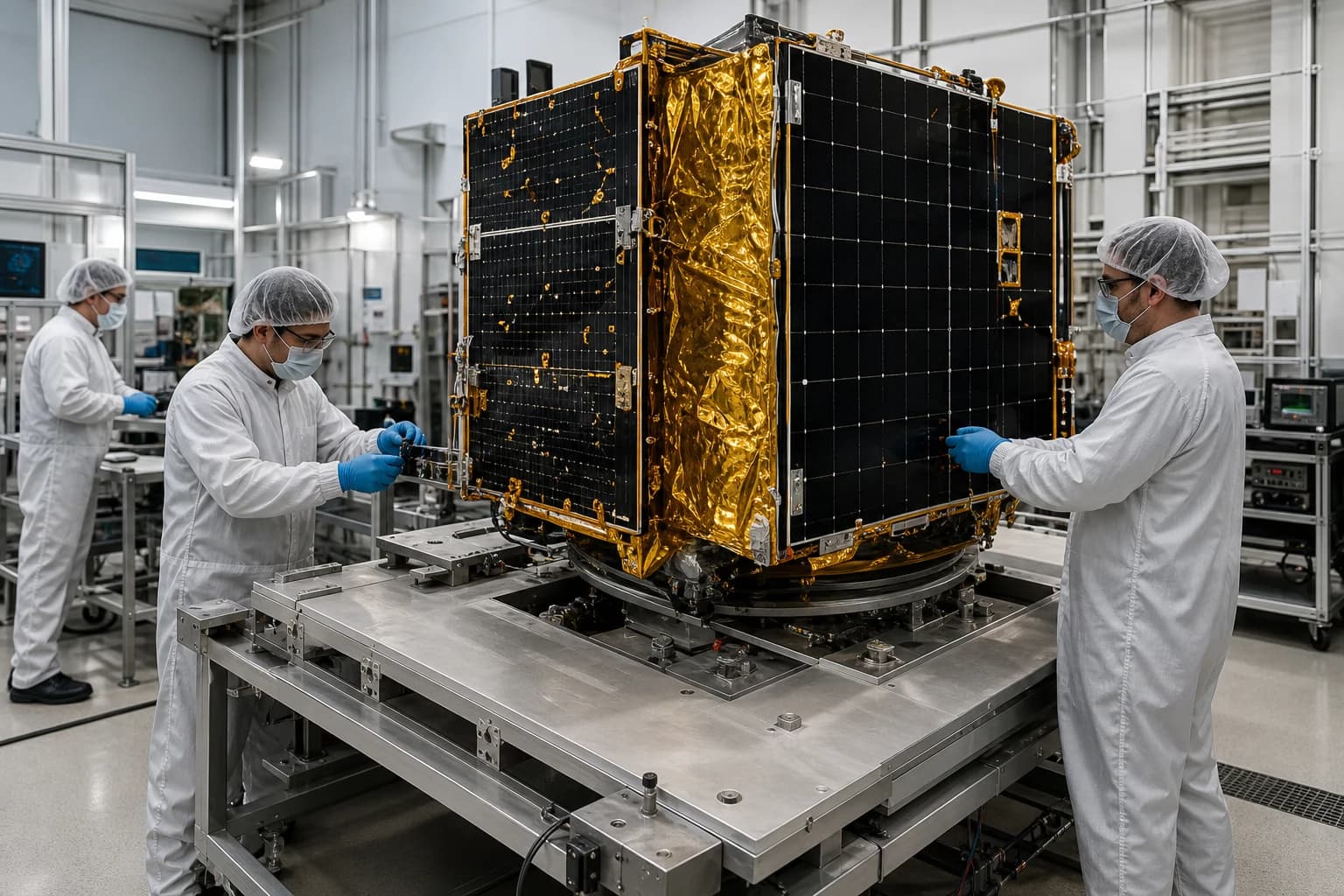
Images and short-form video share the same hardware, light, palette, and editorial direction—because the agent keeps the full brief in view.

04 / Check
Vision validation scores the work against the brief and brand. Obvious misses are regenerated before the campaign comes back to you.

05 / Connected studio
Start in ChatGPT, Claude, Codex, or any MCP client. The finished work returns to the same conversation.
Brand profiles, moodboards, and personas become the creative constraints for the entire campaign.
Every run has a hard credit cap, and vision checks each result against the brief before delivery.
Build the image system and its launch film in one run instead of stitching together separate tools.
06 / Connect once
Paste one brief. It installs the CLI, asks you to approve the machine, and learns the workflow on its own.
Set yourself up with Dream Pixel Forge so you can generate on-brand images and video for me.

1. Install the CLI: npm install -g dreampixel-cli (or use npx dreampixel-cli). The command it installs is dpf.
2. Run dpf whoami. If no key is configured, ask me to run dpf login in my terminal: it opens my browser to approve this machine. Never ask me to paste an API key into this chat.
3. Run dpf skill install in the project root so you have the full workflow on disk: create a run, plan concepts, generate, validate with vision, and render video in the background.
4. Confirm the connection with dpf tools, then ask me for my first brief.

If you connect over MCP instead of a terminal, the endpoint is https://www.dreampixelforge.com/api/mcp with my API key as an Authorization: Bearer header.
07 / Questions
Instead of typing prompts into a web form, an AI agent runs the whole creative job: it plans concepts, generates images and video, and checks the results, while you approve the brief and review the output. Dream Pixel Forge ships its own creative director agent in the studio, and the CLI and MCP endpoint let you bring your own.
Any MCP client: the Claude desktop app, claude.ai connectors, Claude Code, Codex, and ChatGPT all work. Any terminal-based coding agent can drive the dpf CLI directly, and dpf skill install teaches it the whole workflow in one command. For clients that prefer a local server, dpf mcp serves the same tools over stdio, and Dream Pixel Forge also ships an agent-plugins.org plugin that packages the server and the workflow skill in one folder.
No. dpf login opens your browser so you can approve the machine: nothing to copy or paste. Headless environments and CI read the DPF_API_KEY environment variable instead, and connectors that cannot send headers can carry the key in the endpoint URL path.
The endpoint serves your brand profile, moodboards, and AI personas to the agent as context. Output matches your style without re-describing it in every request, the same way the built-in creative director works.
Generations spend the same credits as any other studio work, and every run carries a 20-credit image budget so an over-eager agent cannot run up your bill. See the pricing page for current credit packs and plans.
Yes. dpf video renders clips in the background from the same run, and the agent polls dpf run status with the watch flag until the URL is ready. Video works over MCP as well.
Yes. dpf vision in validate mode scores a generation against the brief and your brand profile, so the agent fixes near-misses before you ever see them. You review finished results, not raw attempts.
From the blog
Case study
Rifle Configurator Case Study: AI Images Behind a 1M-Visitor Site
Rifle Configurator case study: how coding agents generated the art for a 1.35M-visitor site over MCP, and the AI-illustrated guide that led $59,879 in sales.
Guides
Grok Imagine API: Models, Pricing, and Image 2.0 Status
The Grok Imagine API today: current pricing, rate limits, and how to use Image 2.0 now that it is live.
News
Agent Plugins Spec 1.0.0: One Plugin Folder for Every Agent
The Agent Plugins spec 1.0.0 defines one portable plugin folder: plugin.json, skills, and mcp.json. Dream Pixel Forge now ships one. What the new standard covers.
Guides
Can ChatGPT Generate Images? Yes, and Here Is Where It Stops
Yes, ChatGPT can generate images on every plan, free included. How it works, the caps OpenAI never publishes, what it refuses, and when to use another tool.
Guides
Claude MCP Servers: The Ones Actually Worth Connecting
A verified roundup of the best Claude MCP servers, grouped by what they let Claude do, plus the exact commands to add one to Claude Code or Claude Desktop.
Guides
AI Image Generator CLI: Generate Images From Your Terminal
Generate images from your terminal with a zero-dependency CLI. Real scripting and agent workflows with dpf, plus an honest comparison with single-model tools.
Guides
Can Claude Generate Images? No, and Here Is the Fix (2026)
No, Claude cannot generate images natively, and Claude Design does not change that. What it really makes, and how to give Claude Code real image generation via MCP.
Guides
How to Generate Images in Claude Code
Claude Code cannot draw, but it can drive a tool that does. Here is how to make Claude Code and Cursor generate on-brand images over MCP or the dpf CLI.
Guides
Image Generation API for AI Agents: Let Your Agent Create Images
A raw image generation API makes your code do the thinking. Here is how agent-native image generation moves prompt craft and quality checks to the server.
Guides
Image Generation MCP Server: Connect It to Claude & Cursor
An image generation MCP server lets an AI agent create images from a tool call. How to connect one to Claude, Cursor, and Claude Code, and why agent-native wins.
Ready / Awaiting brief
Approve the connection once, then hand every visual brief to the agent you already trust.