Guides
How to Create an AI Influencer in 2026 (Step-by-Step Guide)
How to create an AI influencer in three steps: define a persona, lock its identity with an approved character sheet, and generate consistent photos for every post.
To create an AI influencer, you author a persona once (name, appearance, and personality), generate and approve a character sheet that locks the persona's identity, and then generate consistent photos of that same character for every post. The persona is not a prompt you re-type: it is an authored character with a face, a personality, a voice that writes its own captions, and a memory you can chat with. The hard part is not making one good image. It is making the fiftieth image look like the same person as the first, and giving that person a consistent voice on top. This guide walks through the full process using Dream Pixel Forge, covers the legal questions people actually ask, and gives an honest picture of what the tooling does and does not do for you.
How do AI influencers work?
An AI influencer is a persona whose photos are AI-generated but whose account is run by a real person: you plan the content, approve the captions, and handle any brand relationships. The persona can be an original synthetic character, your own likeness, or a real person who authorized it.
The technical core is identity consistency. A general-purpose image generator produces a different face every time you run it, which is fine for one-off art and useless for a persona. Consistent AI influencers work from an identity anchor:
- A character sheet is generated once from your description. It captures the persona's face, build, and defining features in a reference image.
- Every later image is generated against that anchor, so the same character appears in a coffee shop, at the gym, or on a beach without drifting into a different person.
- You approve the anchor before it locks. If the first character sheet is not right, you give feedback and regenerate until it is.
This is the difference between an AI influencer tool and a plain image generator. If you have tried to build a persona by pasting the same prompt into a general generator, you have seen the drift problem firsthand.
Step 1: Define your influencer's look
In Dream Pixel Forge, open Influencers and create a new influencer. You give the persona two things:
- A name. This is the identity you will build an audience around, so pick something you are happy to put in a social media handle.
- An appearance description. Age range, features, style, vibe. You have room to be specific, and specific is better: "mid-20s, warm brown eyes, shoulder-length black hair with subtle waves, athletic build, streetwear style" gives the character sheet far more to work with than "pretty woman."
Two shortcuts if you do not want to start from a blank page:
- Presets. The catalog includes ready-made persona starting points across fitness, fashion, travel, and other niches. A preset pre-fills the appearance description, and you can edit every word of it before continuing. It is a starting point, not a template you are stuck with.
- Reference photos. You can import up to 5 photos to seed the persona's look. This is how you create an AI version of yourself: your face, posting daily, without photoshoots.
Before continuing you declare a likeness basis: the persona is based on your own likeness, on a person who authorized it, or is fully synthetic. This takes one click and matters more than it looks (see the legal section below).
Step 2: Approve the character sheet
Next, the app generates the character sheet: the identity anchor image every future generation will be conditioned on. This is the single most important image in the whole process, so the flow forces a review step rather than auto-accepting it.
Look at the sheet the way a casting director would:
- Does the face match the age and features you described?
- Are the defining details there (the ones you would use to describe this person to a friend)?
- Is the overall vibe right for the niche you are entering?
If anything is off, write what you want changed ("warmer skin tone, shorter hair, softer jawline") and regenerate. Iterate until the sheet is right, because every image you ever generate for this persona inherits from it. When it is right, approve it. The influencer is now marked ready and its identity is locked.
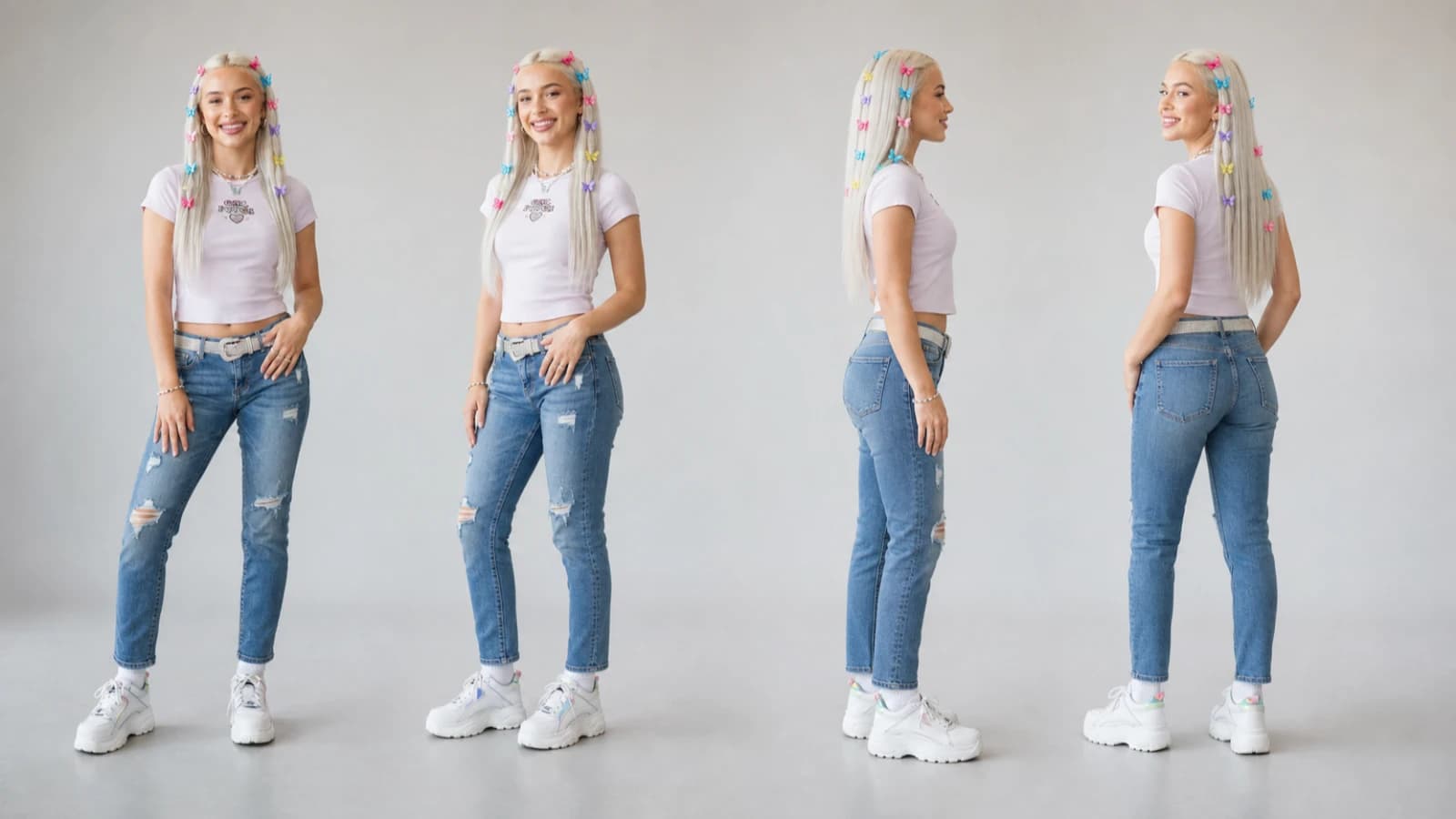
Chloe's identity anchor
Four reference angles establish one face, hairstyle, build, and visual vocabulary before the first post is generated.
Approve once · reuse everywhere
Step 3: Generate content in the persona studio
Once approved, the influencer gets a persona studio: a generation workspace where every image renders your locked character. Describe the scene and the studio handles keeping the person consistent:
- "Golden-hour rooftop, casual outfit, city skyline behind her"
- "Gym mirror selfie, athletic wear, phone visible"
- "Cafe table with a matcha latte, soft window light"
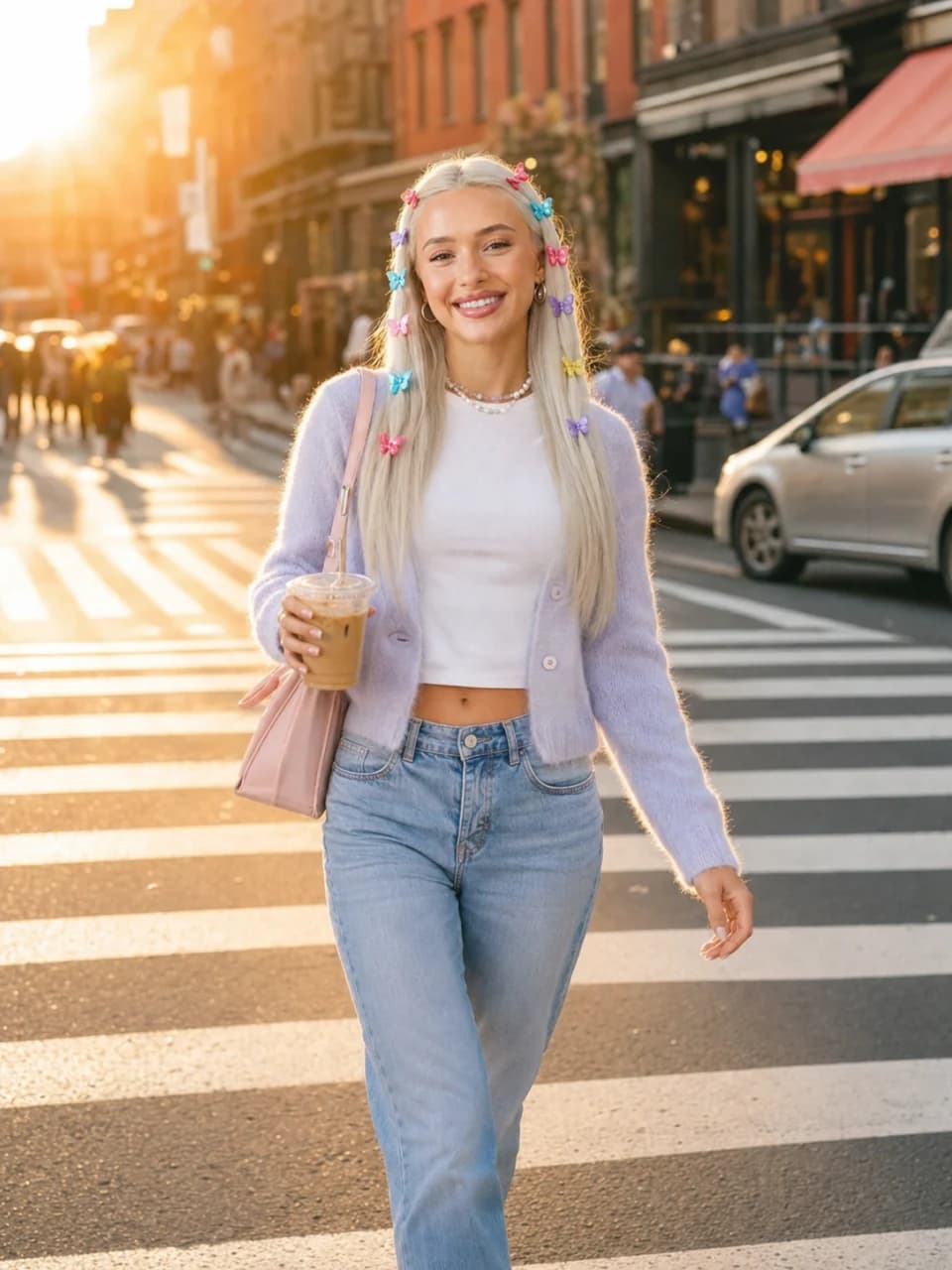
City coffee run
Golden hour · street style
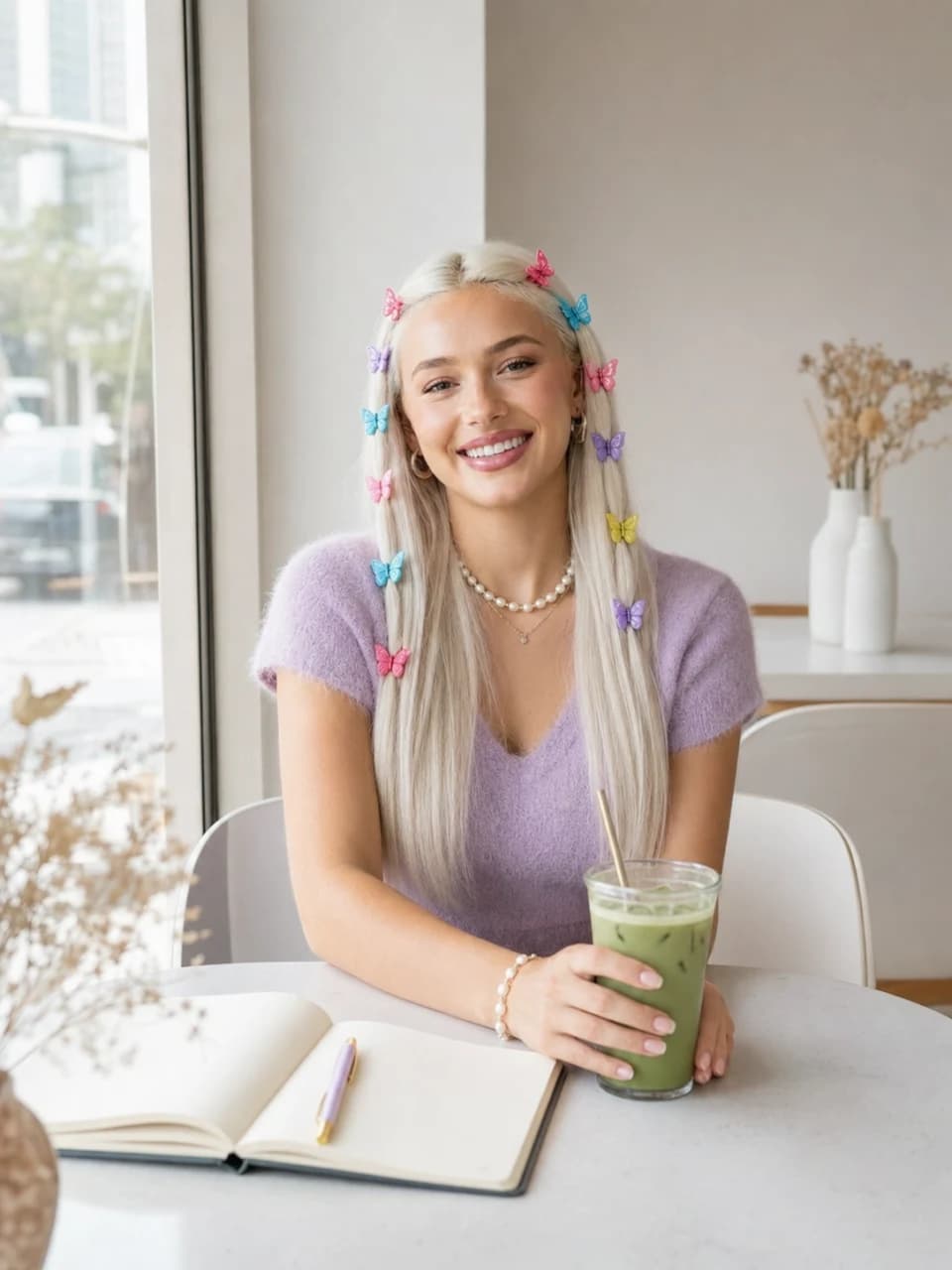
Morning matcha
Soft light · lifestyle
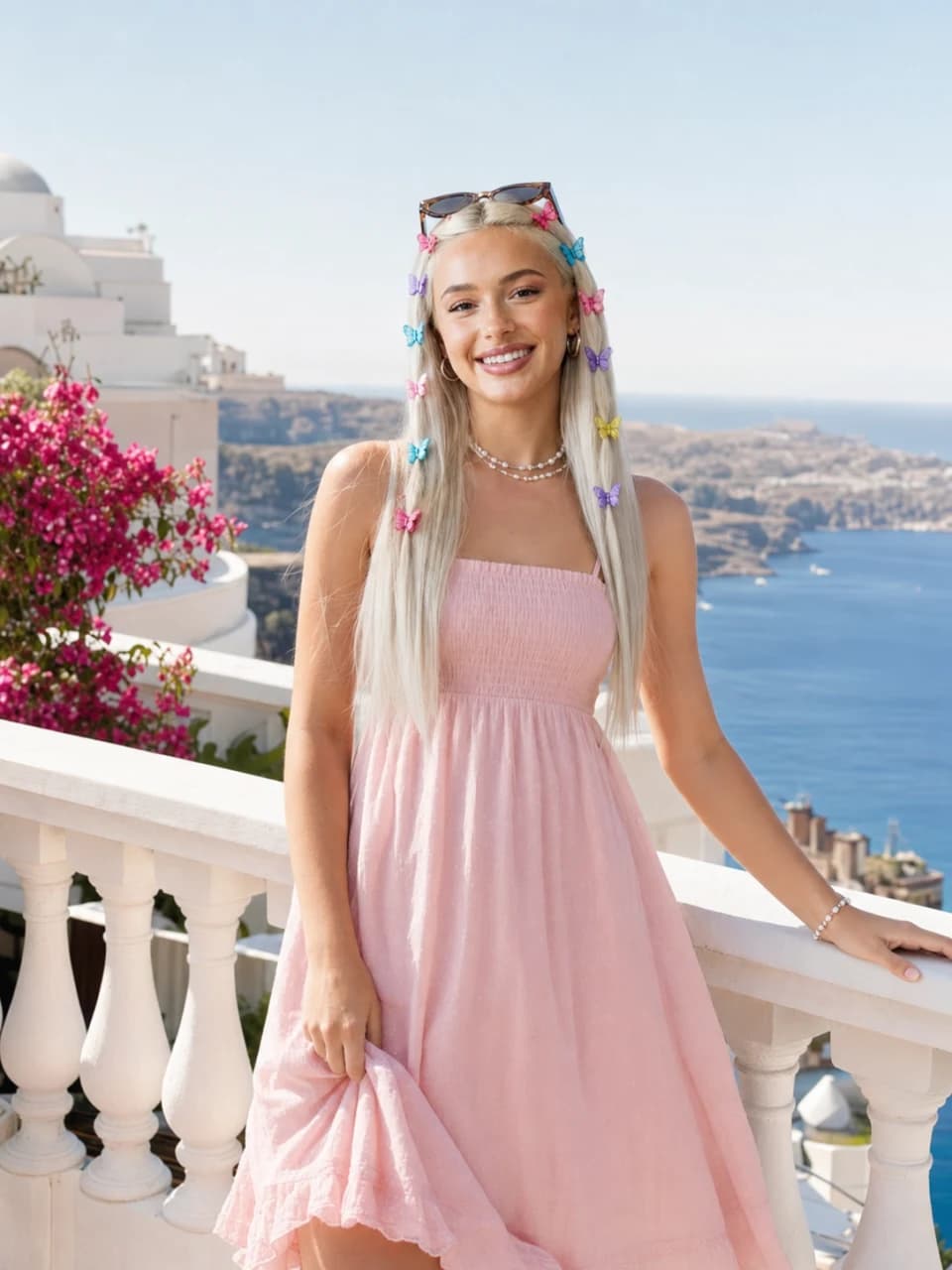
Mediterranean escape
Travel · resort campaign
A practical posting workflow that works for new accounts:
- Batch a week of content in one sitting. Generate 10 to 15 scene variations, keep the best 5 to 7.
- Keep a scene log. Note outfits and locations you have used so the feed reads like one person's life, not a random image dump.
- Mix shot types. Portraits, candids, environment shots. A feed of identical framings reads as synthetic even when each image is good.
- Match the niche's visual vocabulary. A fitness persona posts progress-style shots and gym environments; a travel persona needs recognizable location context. Study the top human accounts in your niche and mirror their content mix.
Every image lands in the persona's gallery, so you can review the character's whole history in one place and catch drift or repetition before your audience does.
Step 4: Give your persona a voice
A locked face is only half a character. The step most people skip is giving the persona a voice: the personality that decides how it writes and how it talks. In Dream Pixel Forge this lives on the persona's voice card, and you fill it in one of two ways.
- Write the personality directly. Set the persona's tone, niche, backstory, catchphrases, and any topics to avoid. Unlike the appearance, which locks with the character sheet, the personality stays editable forever, so you can refine the voice as the account finds its footing.
- Or answer the guided interview. If a blank form is intimidating, the interview asks a short series of questions about who the character is and drafts the whole personality from your answers. You review the draft, change any word, and save. It is the same no-prompt-engineering idea as the character sheet, applied to voice: you have a conversation, the tool does the writing.
Once the character has a voice, two things unlock:
- Captions in the persona's voice. Any image can caption itself the way your character actually talks, tuned to the platform (Instagram, TikTok, or X) with the hashtag style you prefer. Turn on auto-captions and every new render arrives already written, so the caption is never the thing standing between a good image and a posted one.
- A character you can talk to. The persona has a persistent chat: you can talk to the character you created to plan a week of posts, brainstorm scene ideas, or pressure-test its voice, and it answers in character because it is reading the same personality your captions are written from. It remembers the conversation, so the character develops over time instead of resetting every session.
You can define the voice before you generate a single image or backfill it once the look is right; the persona works either way. Doing it early is the better habit, because auto-captions can only write for a character whose voice already exists.
Is it legal to create an AI influencer?
Creating a fully fictional AI influencer is legal in most jurisdictions. The risk concentrates in three places:
- Real people's likenesses. Generating content from someone's face without permission can violate their right of publicity and, in a growing number of places, specific deepfake laws. This is why Dream Pixel Forge asks for a likeness basis (self, authorized, or synthetic) when you create a persona: it makes the one genuinely risky choice explicit instead of burying it.
- Undisclosed sponsorships. In the US, FTC endorsement rules apply to virtual influencers the same as human ones. If a post is paid, disclose it.
- Platform AI-content rules. Instagram, TikTok, and YouTube all require labeling realistic AI-generated content. Label it. Audiences punish discovered deception far more than disclosed synthetics; the biggest virtual influencers are openly virtual and their audiences follow them anyway.
None of this is legal advice, but the practical rule is simple: invent a person or use a face you have rights to, and disclose what needs disclosing.
Do AI influencers make money?
Some do, through the same channels as human creators: brand sponsorships, affiliate links, and their own products. Virtual personas like Lil Miquela have worked with major fashion brands, and agency-built AI models have reported meaningful monthly sponsorship income. Most accounts, AI or human, earn little, and the reason is worth understanding: the advantage is leverage over content production, not a shortcut to an audience. What used to take a photographer, a location, a model, and a full shoot day now takes a description and a few credits, and a persona with a locked identity and a defined voice can produce a coherent week of captioned posts in one sitting. That is the part that used to be expensive and slow.
Be honest about what it does not do: the generator solves production, but it does not solve distribution. You still need a clear niche, consistent posting, and engagement built over months, exactly like a human account. Treat any tool that frames a persona as passive, hands-off output as a red flag; treat cheap, consistent, on-voice content as the real edge, because content production is the cost the tooling actually removes.
Common mistakes to avoid
- Approving a mediocre character sheet. Every future image inherits from it. Iterate at step 2, not after 40 posts.
- Changing the persona's look mid-run. Audiences notice. If you want a new look, create a new influencer rather than mutating one with followers.
- Posting only portraits. Real accounts have texture: environments, details, candids. Use scene variety to build believability.
- Skipping the AI disclosure. Getting caught reads as deception and kills accounts. Being openly virtual does not.
- No niche. "Attractive person posts photos" is not a content strategy for humans or synthetics. Pick a vertical and post inside it.
Start with one persona
Create a single influencer with the AI influencer generator, spend real effort on the character sheet and its voice, and batch your first two weeks of captioned content before you post anything. If you want to experiment with the underlying generation first, the profile avatar tool and freeform generator are quick ways to get a feel for the image quality, and the pricing page covers how credits work. The persona itself takes about ten minutes to create. The audience takes months. Start the ten-minute part today.