Guides
MiniMax H3 (Hailuo 3.0): 2K Video, Native Audio, and Open Weights
MiniMax H3 makes 15 second 2K clips with native stereo audio at $0.13 a second. Model IDs MiniMax-H3 and minimax/minimax-h3, pricing, and where the open weights are.
MiniMax H3 is a video model that takes text, images, video, and audio in the same request and returns a clip of up to 15 seconds at 2K with native stereo sound, generated in one pass rather than scored afterwards. MiniMax released it on Friday, July 31, 2026, the same day ByteDance pushed Seedance 2.5 out to consumers, and priced it far below the Western incumbents. Hailuo 3.0 and Hailuo 03 are the same model: Hailuo is MiniMax's consumer video brand, H3 is the model name.
This guide covers what H3 actually does, the reference system that is its real differentiator, what a clip costs against Veo 3.1, where you can call it today, and the open weights situation, which is more complicated than the headlines suggest. For the prompt format itself, the three labeled fields H3 expects and worked examples for each task type, see our MiniMax H3 prompt guide.
MiniMax H3 model IDs and pricing: MiniMax-H3, minimax/minimax-h3, minimax/hailuo-3
Unlike Seedance 2.5, H3 is callable today, and it is callable from four places under four different model strings. The one you pick changes the price by up to a factor of two:
| Platform | Model ID | 2K output | Reference image |
|---|---|---|---|
| MiniMax platform API (first party) | MiniMax-H3 | $0.13 per second | First 5 free, then $0.04 |
| fal | minimax/h3/text-to-video, minimax/h3/reference-to-video, plus image-to-video and video editing | $0.26 per second | First 5 free, then $0.08 |
| Vercel AI Gateway | minimax/minimax-h3 | Not published separately | Not published separately |
| OpenRouter | minimax/hailuo-3 | $0.13 per second | Not published separately |
Two traps in that table. The fal endpoints carry no fal-ai/ prefix, which is the opposite of the convention for most other models fal hosts, and fal charges exactly double first-party for the same output. And the cheaper 768p tier at $0.09 per second is not on this table because it is sales-gated closed beta, so it is not a rate you can plan against. The full cost breakdown, including how reference video is billed as a second clip, is in the pricing section below.
What MiniMax H3 is
H3 is pitched as a single model for jobs that normally take several. In MiniMax's own framing it is an omni-modal generation model: one context window that accepts a prompt, reference stills, reference video, and reference audio together, and emits video with matched sound. Reuters describes the same capability from the outside, noting that H3 "can edit existing content and transfer movements between videos."
The concrete output spec:
- Resolution. 2K, which MiniMax defines as 1440 pixels on the short edge and roughly 3.7 megapixels on wider formats, so 21:9 comes out near 2976x1248. There is a cheaper 768p tier, but it is in closed beta and sales-gated. There is no 1080p option at all: MiniMax's API lists 2K as the only generally available resolution.
- Duration. 4 to 15 seconds on MiniMax's own API, integer values only, so no 7.5 second clip. Resellers expose a narrower 5 to 15 second range.
- Frame rate. 24fps.
- Audio. Native stereo, generated with the picture rather than added after. Dialogue, ambience, and music all come from the same pass.
- Inputs. Text, images, video, and audio, combinable in one request. Prompts cap at 7,000 characters.
Under it, MiniMax names three pieces. H3-VAE is the tokenizer, which the company credits with a "4x gain in effective sequence length" and "across-the-board gains in reconstruction quality" over its predecessor. H3-Omni Transformer is the backbone, described as an "architecture built for task generalization," which is the technical way of saying the same weights are meant to handle text-to-video, image-to-video, and editing without separate task heads. And H3 in-context regeneration is how it reaches 2K: instead of running a conventional upscaler over a finished low-resolution clip, the model regenerates the sequence at the higher resolution with the original context still in scope. That distinction matters in practice, because upscalers invent detail that was never in the shot, while regeneration re-derives it from the same conditioning.
One correction worth making early, because the search results are full of it: several pages that went up before launch advertise Hailuo 3.0 as a "native 4K 60FPS" model. MiniMax's own announcement says 2K. Those pages were written speculatively and never updated.

The reference system, and why it is the reason to care
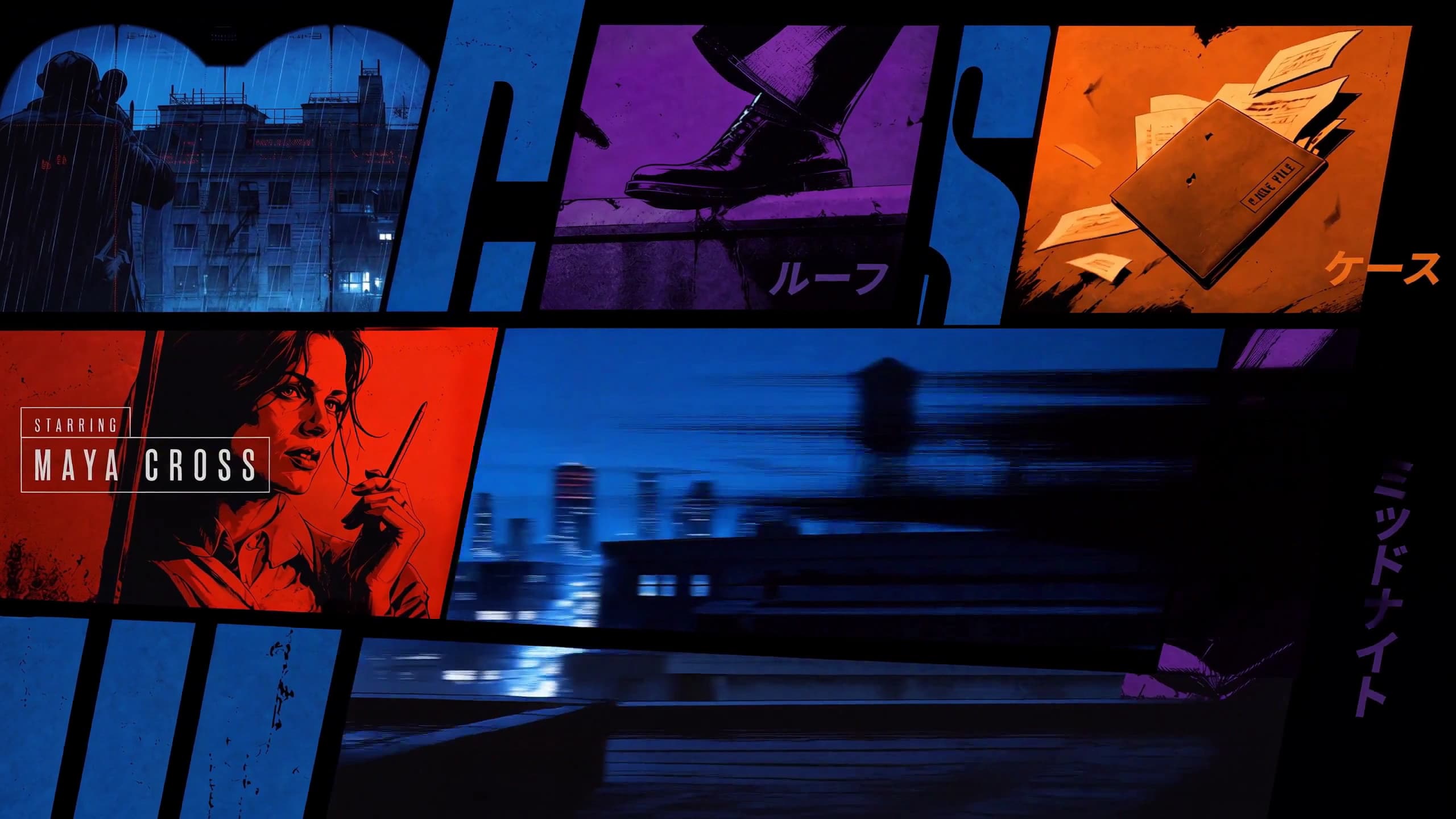
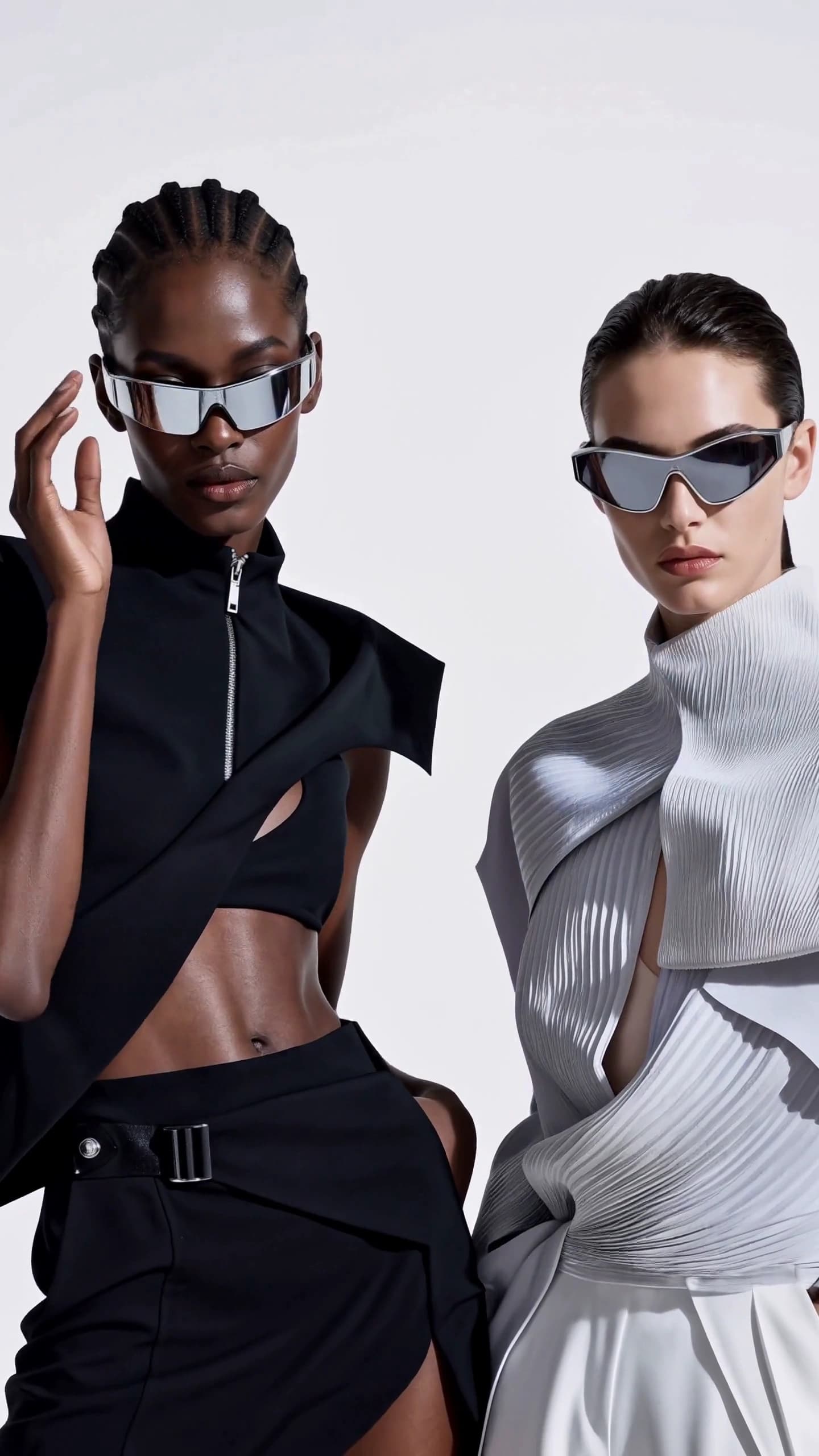
Most video models take one image. H3 takes a set, across three media types, in a single generation. That is the feature that separates it from a conventional image-to-video model, and it is what MiniMax is really selling.
The caps, from MiniMax's API reference:
| Reference type | Max count | Per-file limit |
|---|---|---|
| Images | 9 | 30MB each |
| Videos | 3 | 50MB each, 2 to 15s, 15s total |
| Audio clips | 3 | 15MB each, 2 to 15s, 15s total |
Those are per-type ceilings, and a separate global cap of 12 files per generation binds on top of them. So you cannot send 9 images plus 3 videos plus 3 audio clips; you can send any mix up to twelve, within each type's own limit.
The practical difference is control over things a text prompt cannot pin down. A single source frame fixes composition and wardrobe for one shot and nothing else. A reference set can carry a character across several angles, an environment, a color treatment, and, because audio is an input type too, a voice or a musical style for the model to match. You are not describing the look you want, you are showing it.

Reference image
The still supplies the character and setting.
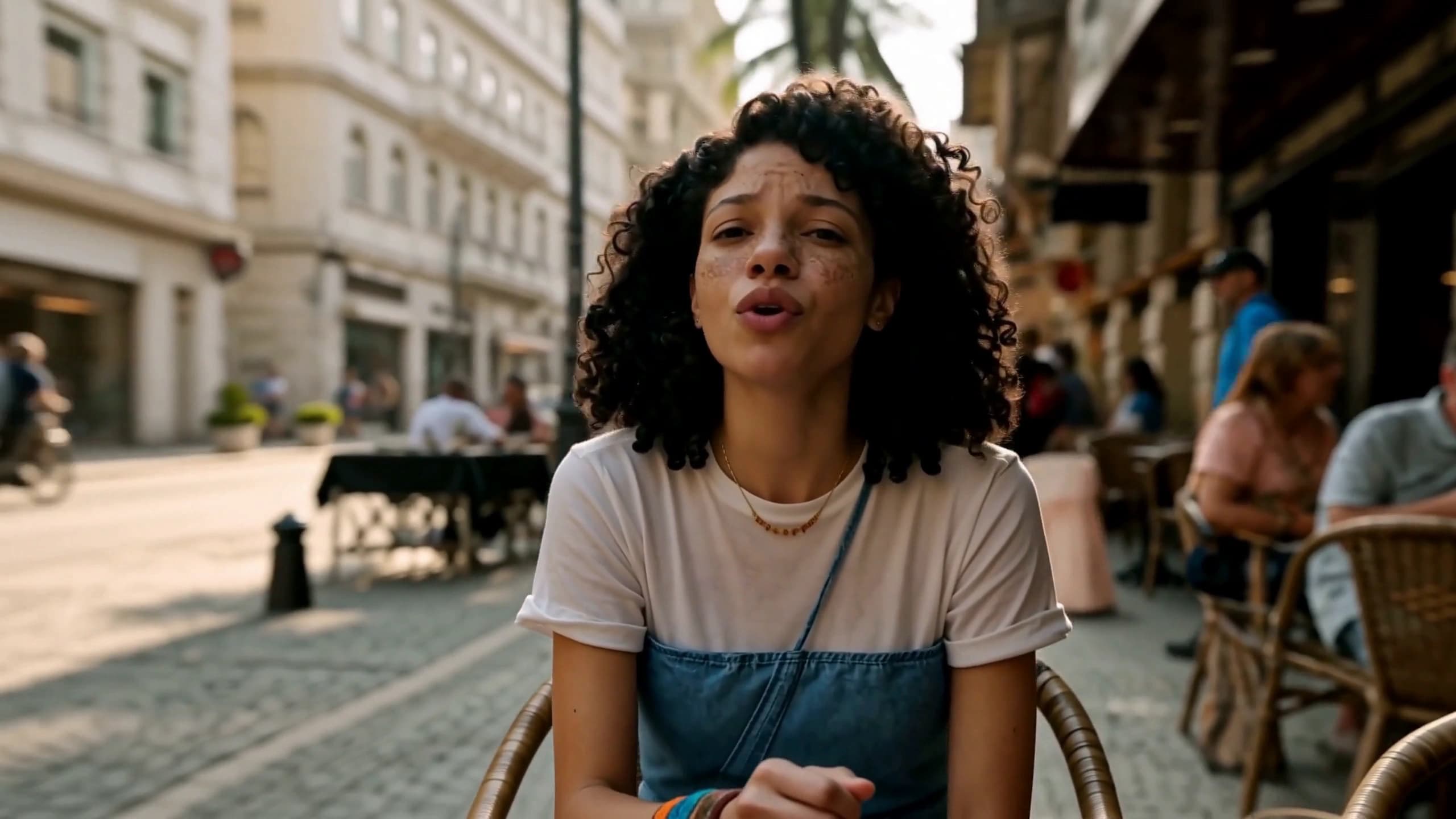
H3 output
Motion came from a video reference and vocals from a separate audio reference. (Source: MiniMax)
Two limits to plan around. First, references past the free allowance are billed, so a nine-image set is not free the way a prompt is. Second, more references are not automatically better: the same thing that happens on Seedance happens here, where a tightly related set casts the shot and a loosely related one gets averaged into mush. Three or four focused references with clear roles beat a dozen vague ones, and the 12-file cap means you have to choose anyway.
Aspect ratio behaves differently depending on which path you are on. Text-to-video requires you to name one of 21:9, 16:9, 4:3, 1:1, 3:4, or 9:16. Image-to-video defaults to adaptive and follows the source frame instead, which is the sane default: an approved still already has a frame, and forcing it into a different one means cropping something you chose deliberately.
MiniMax H3 pricing
H3 is pay-as-you-go, billed per second of output. From MiniMax's own rate card:
- 2K: $0.13 per second. A 15 second clip is $1.95. Audio is included.
- 768p: $0.09 per second, but the tier is, in MiniMax's words, "currently in closed beta. Please contact sales before use." Do not build a budget on it yet.
- References: the first 5 images are free, then $0.04 each. Reference audio is free. Reference video is billed by its input duration at the same per-second rate as the output.
That last line is the one that bites. Feeding a 10 second reference video into a 10 second 2K generation costs $1.30 for the reference on top of $1.30 for the output. Reference video is not a free conditioning signal, it is a second billable clip.
Where you call H3 from changes the price materially. fal, the main third-party host, lists $0.26 per second at 2K, exactly double MiniMax's own rate, and $0.08 per reference image past the free five instead of $0.04. OpenRouter lists $0.13 per second, matching first-party. If per-clip cost is the reason you picked H3, that spread is worth checking before you wire anything up.
Against the incumbent:
| Model | Per second | A 10 second clip |
|---|---|---|
| MiniMax H3, 2K (first party) | $0.13 | $1.30 |
| MiniMax H3, 2K (on fal) | $0.26 | $2.60 |
| Veo 3.1, 1080p | $0.40 | $4.00 |
| Veo 3.1, 4K | $0.60 | $6.00 |
| Veo 3.1 Fast, 1080p | $0.12 | $1.20 |
Veo 3.1 rates come from Google's Gemini API pricing page, where audio is included in the default rate. MiniMax's own claim is that generating 2K video with H3 costs "less than a third" of what mainstream models charge, and that its 768p tier is "less than half the price of mainstream models' 720p." MiniMax names no rival in either sentence, so treat that as framing rather than a benchmark, but against Veo 3.1 standard the arithmetic does hold: $0.13 versus $0.40 is a factor of 3.1.
The comparison that flatters H3 less is Veo 3.1 Fast, which is within a penny per second of first-party H3 and cheaper than H3 on fal. The honest read: H3 badly undercuts the flagship tier, roughly matches the budget tier, and offers a resolution and a reference system that neither Veo tier does.
MiniMax H3 API access, and where else to call it
Four routes, in rough order of how quickly you can be generating.
- Hailuo AI, MiniMax's own app. The consumer front end, where H3 went live at launch. Fastest way to see output without writing code.
- The MiniMax platform API. First-party, cheapest, and the source of truth for rate cards. The model id is
MiniMax-H3. - fal. A day-zero partner, serving H3 as separate endpoints rather than one endpoint with optional inputs:
minimax/h3/text-to-video,minimax/h3/reference-to-video, plus image-to-video and video editing. Note there is nofal-ai/prefix on these. - Aggregators. The Vercel AI Gateway carries it as
minimax/minimax-h3, and OpenRouter asminimax/hailuo-3.
One absence worth stating, because people search for it: H3 is not on Replicate. The newest MiniMax video models there are Hailuo 2.3 and 2.3 Fast.
The naming is inconsistent across all of these. MiniMax calls it H3, Vercel's changelog calls it Hailuo 03, OpenRouter calls it hailuo-3. Same model.
Adoption has been unusually fast for a model this new. On Vercel's AI Gateway video leaderboard, H3 sits second at 18.8% of video generations, behind only Seedance 2.0 Fast at 37.5% and ahead of both Veo 3.1 tiers. Price is doing most of that work; developers route volume to the cheapest model that clears the bar.
Dream Pixel Forge now routes to H3. It sits in the same model dropdown as Veo 3.1, Seedance 2.0, and Grok Imagine Video, on the same credit balance, so you can run the same brief across engines and compare. If you want the prompt format that gets the most out of it, the H3 prompt guide covers the three-field structure with copy-ready examples.
H3 open weights: what has actually shipped
This is where the coverage and the reality diverge, so be precise about it.
The weights have now shipped. As of August 5, 2026, the MiniMax-H3 repository on Hugging Face carries two BF16 checkpoints, Base FL2VA for text and first/last-frame tasks and Base Ref2VA for reference tasks, with deployment recipes for SGLang, vLLM, diffusers, and ComfyUI. Two pieces of the hosted product are not in the release: H3-Context-IR, the preprocessing system that rewrites free-form prompts into the structured format the base model consumes, and H3-Regenerate-2K, the module that produces 2K output. A local deployment therefore tops out at 768p, and you write the structured prompt yourself, which is exactly what our H3 prompt guide teaches.
The license is also worth reading before you build on the promise. H3 is to ship under the MiniMax Community License, which per the South China Morning Post allows free non-commercial use and permits commercial use only for organizations with under US$20 million in annual revenue, with attribution required. That is a source-available license with a revenue cap, not an OSI-approved open source license, and it is the same shape as the Krea 2 license. For most independent creators and small studios the cap is irrelevant. For anyone integrating H3 into a product at scale it is the whole question.
MiniMax H3 vs Seedance 2.5 vs Veo 3.1
H3 and Seedance 2.5 launched on the same day, which the press framed as an open-versus-closed split: MiniMax promising weights, ByteDance shipping a hosted product. Both narratives are a little generous. MiniMax's weights arrived five days after the launch rather than with it, and ByteDance had already announced Seedance 2.5 back in June. What genuinely happened on July 31 is that two Chinese labs put competing video models in front of users within hours of each other, and the Western incumbents did not respond on price.
| MiniMax H3 | Seedance 2.5 | Veo 3.1 | |
|---|---|---|---|
| Duration | 4 to 15s | 30s in one generation, extendable twice | 4, 6, or 8s |
| Resolution | 2K only (768p in closed beta) | Not published | 720p, 1080p, 4K |
| Native audio | Yes, stereo | Yes | Yes |
| References | Images, video, and audio, 12 files max | Larger, exact caps unconfirmed | Reference images only |
| Price | $0.13/sec at 2K | Not published | $0.40/sec at 1080p |
| API access | Live, first party and partners | Announced, not yet public | Live on Gemini API and Vertex AI |
| Weights | Published Aug 5 (768p base; 2K module withheld) | Closed | Closed |
Seedance 2.5 went live on Jimeng AI and the Pro tier of Doubao on July 31, with API access on Volcano Engine still listed as coming soon. ByteDance's own product page confirms the 30 second single generation and the two extensions, but publishes no resolution, reference cap, or price; TechNode reports a reference budget of up to 30 images, 10 videos, and 10 audio clips, which would be several times H3's. Until the API opens, most of the Seedance 2.5 column is a promise rather than a spec sheet. Seedance 2.0, the version most third-party tools including this one still run, is covered in our Seedance prompt guide. Veo 3.1 and its very different prompt dialect are covered in the Veo 3 prompt guide.
On quality, be careful what you repeat. No head-to-head benchmark of H3 against Seedance 2.5 exists, and cannot yet: Seedance 2.5 has no public API, so it appears on no leaderboard. Every "H3 beats Seedance 2.5" and "Seedance 2.5 beats H3" claim currently in circulation is someone's impression of a handful of demo clips. MiniMax itself is unusually candid on the comparisons that can be made: the company concedes H3 trails Google's Gemini Omni Flash on text-to-video, and trails both Seedance 2.0 and Gemini Omni Flash on image-to-video, while claiming the top spot in video editing.
Where H3 ranks right now
The third-party measurement that does exist is Artificial Analysis's Video Arena, which ranks models by blind user votes. H3 places well on both boards, with data through July 2026.
On text-to-video it is second at Elo 1242, three points behind Gemini Omni Flash at 1245 and ahead of Dreamina Seedance 2.0 720p at 1225. On image-to-video, the harder board for it, H3 is third:
| Rank | Model | Elo |
|---|---|---|
| 1 | Dreamina Seedance 2.0 720p | 1196 |
| 2 | Gemini Omni Flash | 1194 |
| 3 | MiniMax H3 | 1184 |
| 4 | grok-imagine-video-1.5 | 1113 |
| 5 | HappyHorse-1.1 | 1108 |
Twelve Elo points separate first from third, which in an arena of blind human votes is close enough that the ordering can move with more data. The gap that is actually meaningful is the one below: seventy-plus points between third and fourth. Artificial Analysis also places H3 first on its video editing board, which is the one claim MiniMax leads with and the one place H3 is genuinely at the top.
So the fair summary is narrow but real. H3 is in the top group on both generation boards, leading neither, first on editing, and it got there at roughly a third of the flagship price.
Should you use it
Use H3 when you are generating volume and the per-clip bill is the constraint, when you want a clip longer than Veo's eight seconds, when you have a reference set rather than a single frame and want the model to match a look, a character, and a sound at once, or when the job is editing existing footage rather than generating from nothing, which is the one thing H3 currently leads on.
Reach for something else when you need the top of the field on cinematic fidelity, where Veo 3.1 still wins, or when you need a clip past 15 seconds without stitching, where Seedance 2.5 is the only answer once its API opens. And if your workflow already starts from a still you approved, the model matters less than you think: describe motion only and let the frame carry composition, which is the point of our guide to image to video AI.
Whichever model you land on, the expensive part of video is not the render, it is generating twenty near-misses before the shot is right. Lock the still first. The AI influencer generator builds the consistent persona that reference conditioning exists to keep on model, and the freeform generator gets you a frame to animate in seconds, for a fraction of what a clip costs.