Guides
Product Photography Pricing: What Studios Charge in 2026
Product photography pricing in 2026, read off live rate cards: $15 to $50 per packshot, $89 to $300 styled, plus the setup fees and minimums nobody quotes.
Product photography pricing in 2026 clusters around a narrow band that the guides on this topic rarely state plainly: a plain white-background image from a studio that publishes its rates costs between $15 and $50, and a styled lifestyle image with a set built for it costs between $89 and about $300. Everything above that is models, food, jewelry, or an agency minimum. Everything below it is either a retouching service that assumes you already shot the photo, or AI.
Every number on this page was read off a live pricing page or a live wage dataset on 29 July 2026, and each one is linked to the page it came from. If you are about to hire someone, the useful thing is not the industry-average range, it is the actual rate card of a company that will take your order today, plus the line items that turn a $40 quote into a $190 invoice.
How much does product photography cost in 2026?
Here is what published rate cards actually say, side by side, with the constraint that matters next to each one. Rates are per finished image unless noted.
| Vendor | Published rate | The catch |
|---|---|---|
| ProShot Media | $15 per photo (general product) | $100 one-time setup fee per product type, so six images is $190, not $90 |
| ProductPhoto | $40 for 1 to 10 photos, $35 for 11 to 50, $30 for 51 or more | 7 to 10 business days standard, 10 to 12 at high volume |
| soona | $39 per photo, $93 per video clip | $149 studio fee per booking unless you hold a membership ($13/month billed annually) |
| Squareshot | $50 standard, $75 advanced, $100 complex (jewelry, watches) | $300 project minimum for non-members |
| Welpix | €49 white background, €99 minimalistic, €149 simple props, €299 custom | €999 minimum project size |
| Pixelz | $0.95 per image (Professional plan) | Retouching only. You still have to shoot the photo |
| Snappr AI | $499/month for 499 credits; 3 credits for a basic studio scene, 18 for product-in-use | Roughly $3 and $18 per image respectively, on a $499 monthly floor |
| Dream Pixel Forge | $29/month for 1,000 credits, 2 credits per image from your product photo | About 6 cents per image, and the hero shot still has to be a real photograph |
Two things fall out of that table immediately. First, the per-image number is close to meaningless without the fee structure around it: ProShot is the cheapest per photo on the list and not the cheapest for a single SKU, because of the setup fee. Second, the spread between the cheapest human route and the AI route is roughly two orders of magnitude, which is large enough that the interesting question stops being price and becomes which images you are allowed to fake.
Product photography rates by shot type
What you pay scales with how much of the frame someone has to build. Studios price that explicitly, and the tiers are consistent across the rate cards above.
| Shot | Verified rate | Source |
|---|---|---|
| White background packshot | $15 to $50 per image | ProShot $15, ProductPhoto $30 to $40, soona $39, Squareshot $50 |
| Flat lay clothing | $20 per photo plus $100 setup | ProShot |
| Ghost mannequin | $25 plus $120 setup, or $75 | ProShot, Squareshot (advanced tier) |
| Jewelry and watches | $15 to $100 per image | ProShot $15 to $25 plus $120 setup, Squareshot $100 |
| Lifestyle on a built set | $19 per photo plus $139 per scene setup | ProShot |
| Hero or feature image | $89 per image | ProShot |
| Hand model shots | $150 per image, or $79 to $100 per hour | Squareshot $150/image, soona $79/hour, ProShot $100/hour |
| Full-body model shots | $190 per image, or $159 per hour | Squareshot, soona |
| 360 degree spin | From $195 per product (24 frames) | ProductPhoto |
| Short product video | $93 per clip, or from $595 for 10 to 20 seconds | soona, ProductPhoto |
| Amazon infographic | $99 per design | ProShot |
The pattern is that a packshot is a commodity and a person in the frame is not. At Squareshot a hand model image is $150 against $50 for a standard packshot, three times the price for the same product, which is worth knowing before you write a shot list full of hands.
What drives product photography cost beyond the headline rate
The single most common budgeting mistake is quoting the per-image rate and forgetting the rest of the invoice. These are the line items, all from the rate cards linked above:
- Setup or booking fees. ProShot charges $100 to $139 once per product type or scene. soona charges a $149 studio fee per booking unless you pay for a membership. These do not scale with image count, which is why small orders have a terrible effective per-image cost.
- Project minimums. Squareshot will not take a non-member product shoot under $300. Welpix will not take an image project under €999. If you have one SKU and want three images, several of the best studios simply are not options.
- Retouching beyond standard. ProShot lists complex editing at $12 per photo, extra styling at $15, recolor at $8 per color, and standalone retouching at $5 to $15. Squareshot charges $3 per item for things like steaming and transparent backgrounds and $20 per image for recoloring.
- Rush fees. ProShot charges 25 percent more for a 3 to 5 day turnaround and 50 percent more for 1 to 2 days, and gives 5 percent off if you can wait 12 days or more. Standard turnaround is a week to two weeks almost everywhere.
- Styling and talent by the hour. soona bills styling at $149 per hour, a hand model at $79 per hour, and a full-body model at $159 per hour, discounted about 10 percent on its $49/month Standard membership.
- Shipping your product to the studio, twice. Nobody itemizes this for you. It is real, and it is the reason remote studio pricing looks cheaper than it is for anything heavy or fragile.
A worked example: six images of one SKU at ProShot, five packshots and one hero, is 5 × $15 + $89 + $100 setup = $264, or $44 per image. The same six at ProductPhoto's 1 to 10 tier is $240 flat. At soona it is 6 × $39 + $149 = $383. The headline rates were $15, $40, and $39. The effective rates were $44, $40, and $64.
Per-image, per-hour, or per-day: which pricing model to accept
Per-image pricing is the right default for catalog work, because it transfers the risk of a slow shoot to the studio and gives you a number you can multiply by your SKU count. Every service in the table above leads with it.
Hourly makes sense in exactly one situation: you want volume and you are happy to do your own editing. ProShot publishes $199 per hour for on-model work with edits billed separately at $8 per image, which in practice means hourly buys you raw files and you pay again for finished ones. If you have an in-house designer, that is often the cheapest real photography you can buy.
Day rates are for shoots where the set, not the image count, is the unit of work. Squareshot publishes $1,125 to $4,450 for an 8 hour product shoot day, $5,950 for a model day with your model, and $7,450 with a model it casts. Lars Miller Media's published guide puts a lifestyle half-day at $800 to $2,000 and a full day at $1,500 to $4,000, which brackets the same territory. A day rate is worth it when you have enough SKUs to fill it: at 30 products a $2,000 day is $67 per product for as many angles as you can shoot, which beats per-image pricing outright.
What photographers earn versus what you pay
These are not the same number, and confusing them is why the rate discussions on this topic go in circles. Salary.com puts the average US freelance photographer at $36 per hour as of 1 July 2026, with the 10th percentile at $27 and the 90th at $43. Payscale reports $35.00 per hour for freelance photographers with product photography skills, last updated 7 February 2026, though on a sample of only 15 profiles, so treat the spread it reports ($20 to $551) as noise rather than signal.
Client-facing rates are multiples of that because the invoice covers gear depreciation, studio time, insurance, retouching hours that are not shoot hours, and the unbilled half of the week. A studio charging $199 per hour is not paying its photographer $199 per hour. When you are comparing a freelancer's hourly rate against a studio's $199, you are usually comparing one person against a permanent lit set with an assistant and a retoucher, and the price difference is mostly real.
When paying a photographer is clearly worth it
There are cases where studio spend is not a nostalgic preference, it is the only thing that works:
- The main marketplace image. Your primary listing photo has to be a true photograph of what you ship. This is a policy question, not a quality question, and it is covered in detail in our guide to ecommerce product photography.
- Texture, material, and scale. A macro of stitching, fabric weave, grain, or finish is exactly the information a buyer is inspecting. Generating it is misrepresentation with extra steps.
- Anything a person wears or holds convincingly. Fit on a real body is a product claim. Model rates are the highest line on every card above because that work is genuinely hard.
- Volume that fills a day. Thirty or more SKUs makes a day rate cheaper per image than anything else in this article, AI included, once you count your own time.
- Food and beverage. Lars Miller Media lists $100 to $400 per dish for a reason. Steam, condensation, gloss, and melt are timing problems that a set solves and a prompt does not.
The AI comparison, honestly
The defensible version of the AI argument is narrow, and it is not that AI replaces the shoot. It is that one real photograph can be reused as the input to every other image you need. Shoot the hero packshot once, properly, then generate the packshot variants, the lifestyle scenes, the seasonal backdrops, and the ad crops from it.
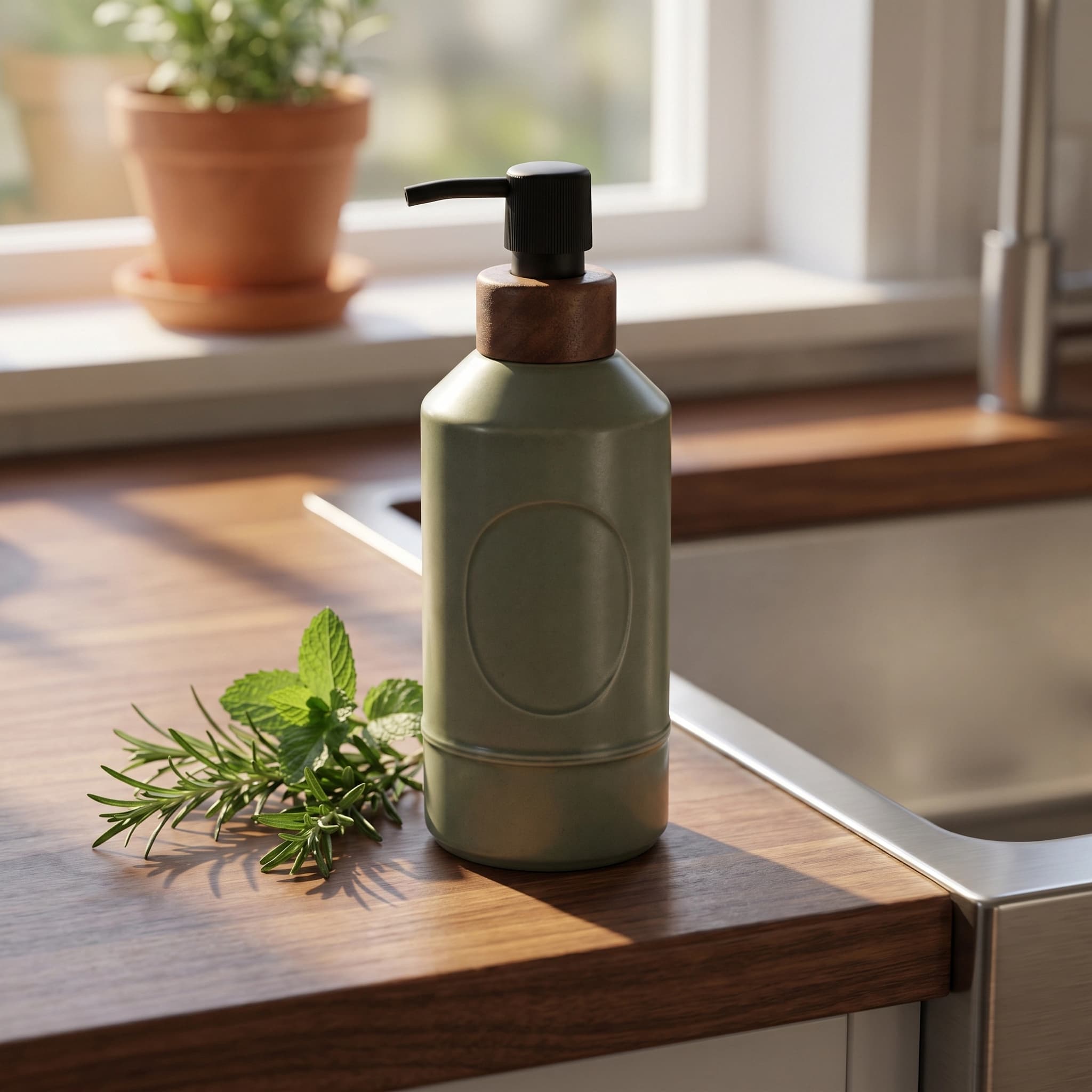
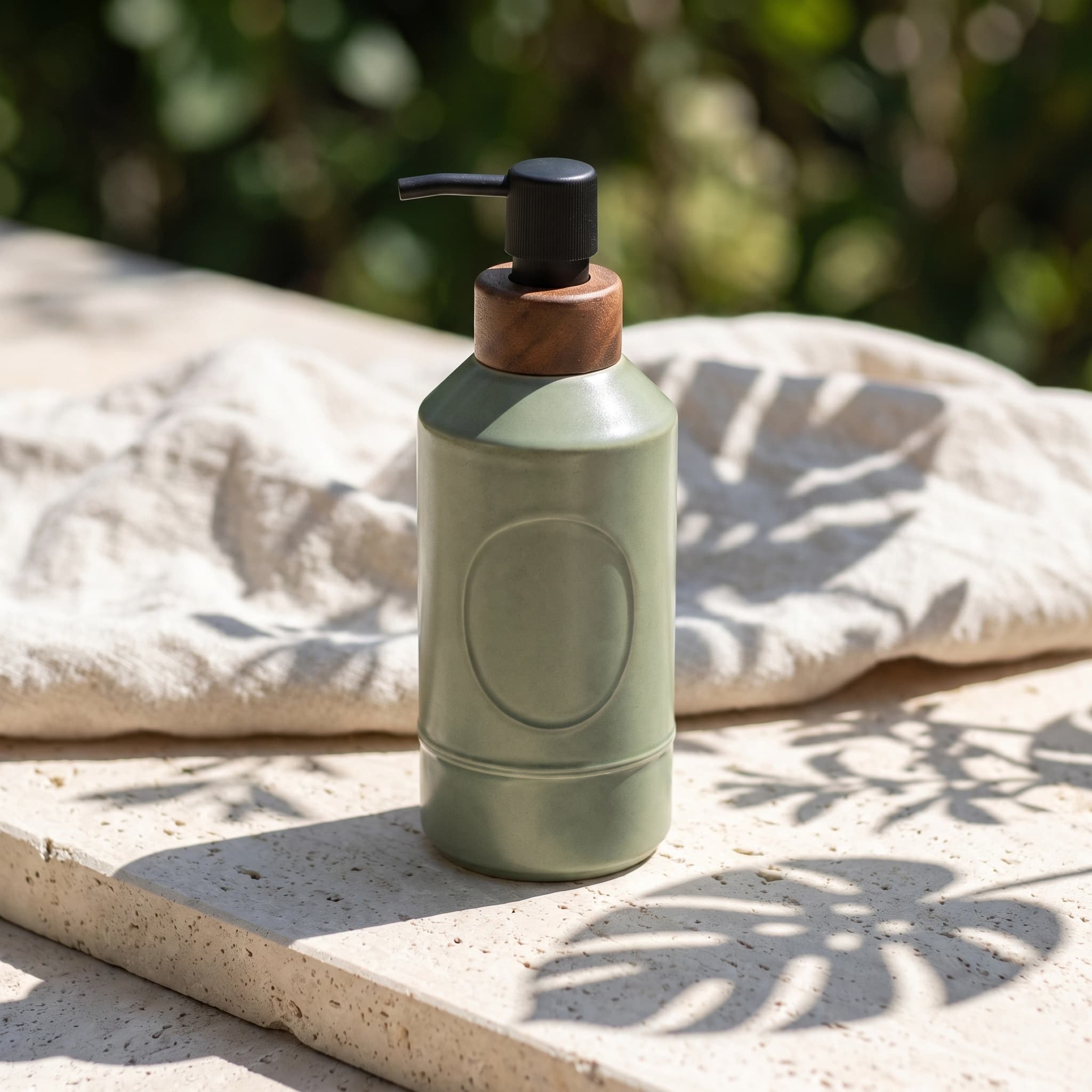
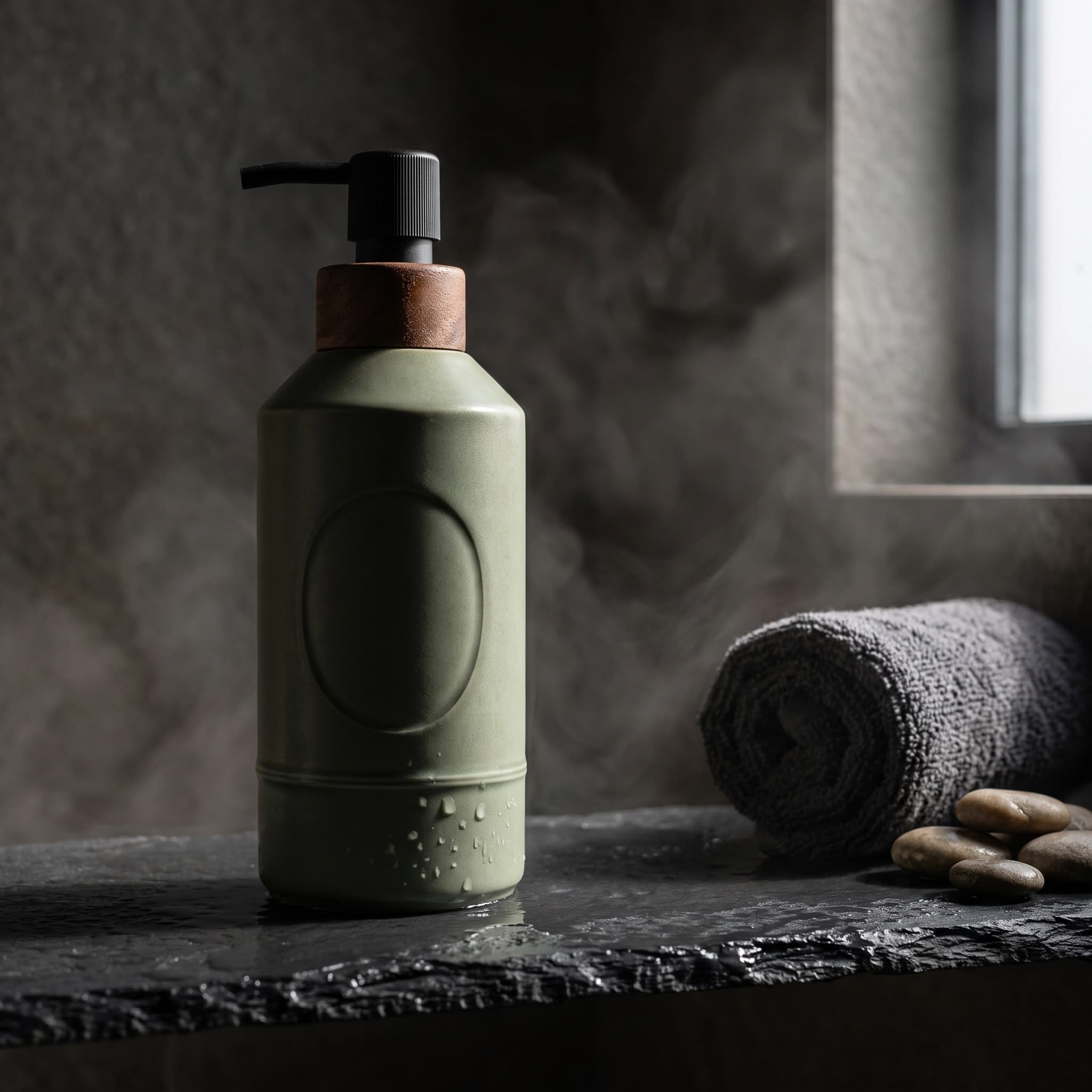
That works because reference-image models redraw a scene around a product photo you supply, rather than inventing a product from a text description. It also fails in a specific way: fine print, small logos, and exact color can shift, so every generated image needs a full-zoom check against the original. Our post on AI product photography covers the failure modes and the marketplace rules in detail, and static ads covers the ad-creative side where no marketplace policy applies at all.
The cost side, using registry-accurate credit prices: on Dream Pixel Forge an image generated from your product photo costs 2 credits by default and 4 on the premium model. Credits come from a plan, so the dollar figure depends on which one:
| Plan | Price | Credits | Cost per image from your photo |
|---|---|---|---|
| Free | $0 | 15 on signup, plus 2 a day when you run low | 7 images to start, no card |
| Starter | $12/month | 300 | About 8 cents (150 images) |
| Pro | $29/month | 1,000 | About 6 cents (500 images) |
| Studio | $79/month | 3,000 | About 5 cents (1,500 images) |
Background removal is 3 credits, a 2x upscale is 2 credits, and a 4x upscale is 3. So a full six-image gallery built from one real photograph is 17 credits including a background cutout and a 2x upscale, which is under 50 cents on the Pro plan against $240 to $383 for the same six images from the studios above. The catch is the one already stated: one of those six still has to come from a camera.
The practical middle path for a small catalog is a hybrid. Buy the cheapest competent packshot you can find, $15 to $40 depending on volume tier, then build everything else from it. Our product lifestyle scene generator takes that packshot and a scene preset and returns a composed lifestyle image, and the product background replacement tool handles the surface-and-backdrop swaps that studios charge a $139 scene setup for.
For sellers whose product is a design rather than an object, print-on-demand and Etsy digital goods, there is nothing to photograph until a sample arrives, and the product mockup generator is the right starting point instead.
If you are the photographer, not the buyer
Half the searches for this term come from photographers trying to price their own work, so: the rate cards linked above are your comparison set, and they are public. A solo photographer competing with ProductPhoto's $30 to $40 packshot on price will lose, because that price assumes a permanent lit set and a volume pipeline.
What is defensible is the work those services structurally cannot do well: being local, handling large or fragile items nobody wants to ship, doing the styling conversation in person, and turning work around in two days without a 50 percent rush fee. Price against your own cost floor, count editing hours as billable, and note that the studios all charge separately for retouching, rush, and setup rather than absorbing them. That itemization is the actual lesson from their pricing pages.
The short version
Budget $15 to $50 per white-background image before fees, which lands at $30 to $50 effective once a setup fee is spread across a small order. Budget $89 to $300 per styled lifestyle image, and $150 to $190 per image once a person is in the frame. Add a rush fee if you are late, and shipping both ways. Expect a project minimum of $300 or more at the better studios. If your catalog is small, the cheapest defensible route is one real photograph per SKU plus generated variants, and if your catalog is large enough to fill a shoot day, a $1,125 to $4,450 day rate beats every per-image price in this article.
Before committing to a quote, it costs nothing to see what your own product looks like staged: the lifestyle scene tool is free to try without an account, and pricing explains how credits work once you are generating a full gallery.