Selling on Etsy
Etsy SEO: How Etsy Search Actually Ranks Listings (2026)
Learn how Etsy search matches and ranks listings, using Etsy's Seller Handbook to improve titles, tags, attributes, conversion, and listing images.
Etsy SEO is the work of setting up your listings so Etsy's own search surfaces them when a buyer types a query. It is not a secret algorithm you have to reverse-engineer: Etsy publishes how search works and which factors it weighs, and the whole game is lining your listings up with those factors. This guide walks through the mechanics straight from Etsy's Seller Handbook, then the practical moves that follow from them.
The short version: Etsy search runs in two stages, matches queries against your titles, tags, categories, and attributes, then ranks the matches by how likely each one is to sell. Everything below is a consequence of those two sentences.
How Etsy search actually works
According to Etsy's How Etsy Search Works guide, a search happens in two phases. First is query matching: when a buyer searches, Etsy scans the keywords in every listing's title, tags, categories, and attributes and pulls the set of listings related to those terms. If your listing does not contain words that match the query, it cannot appear at all. This is why keyword placement is step one and everything else is step two.
Second is ranking. Once Etsy has gathered every listing that matches the query, it uses what it knows about each listing and shop to order them so buyers see the items most likely to sell earlier in the results. Query matching decides whether you are in the running; ranking decides where you land.
Etsy's ranking factors
Etsy names the factors it uses to rank matched listings. These come directly from the Seller Handbook, not from third-party guesswork:
| Factor | What it means |
|---|---|
| Relevancy | How closely your titles, tags, descriptions, categories, and attributes match the query. An exact-match keyword is treated as more relevant and can rank higher. |
| Listing quality score | How well a listing converts, measured from clicks, views, favorites, and purchases. Listings that earn engagement climb. |
| Recency | A new or renewed listing gets a small temporary boost while Etsy gathers data on how buyers respond to it. |
| Customer and market experience score | Shop and listing completeness: clear information, sufficient high quality images, filled-out policies, and good customer service all feed this. |
| Shipping price | Etsy factors shipping cost in for US sellers; free and competitive shipping helps. |
| Shop location | In certain markets, Etsy prioritizes ranking local shops for local buyers. |
Notice what is not on this list: buying ads does not improve organic rank, and there is no way to pay for a higher position in unpaid search. The factors above are what you have to work with, and most of them come down to two things you control directly: the keywords you choose and the quality of the listing itself.
Titles, tags, and attributes: where your keywords go
Query matching only sees words that are actually in your listing, so the keyword fields are where SEO lives. Etsy's Keywords 101 guidance breaks it down:
- Title (140 characters). Use the space. The full title is not visible in search results, but Etsy reads all 140 characters, so pack it with the phrases a buyer would actually type, most important first. Write for a human at the front and cover more queries toward the end.
- Tags (13 per listing). You get 13 tags, and the point is to cover as many different search queries as you can. Use multi-word phrases, not single words, because buyers search in phrases. Do not waste slots repeating the same words, and fill all 13 every time.
- Attributes. Each attribute you add acts like an extra tag and helps you match queries that use those terms. Add every relevant option, even the less precise ones.
- Categories. Categories act like tags too. Pick the most specific subcategory available for the item, since the deeper the category, the more matching terms it contributes.
The recurring theme is matching real buyer language. A tag phrased the way you describe your product loses to the phrase a shopper actually types, so put the keyword research into how buyers search, not how you would name the thing.
Etsy SEO tips that actually move rank
Every tip here maps to a factor Etsy publishes. Skip anything that does not:
- Match buyer phrasing across title and tags. Relevancy rewards exact-match keywords. If buyers search "personalized dog mom mug," those exact words should live in both the title and a tag.
- Fill all 13 tags with distinct multi-word phrases. More non-overlapping phrases means more queries you can match. Redundant tags waste the coverage.
- Complete the whole listing. Attributes, categories, policies, and a full description all feed the customer and market experience score, and they add matchable keywords at the same time.
- Keep shipping competitive. For US sellers, shipping price is a ranking input. Free or low shipping (folded into the item price) helps rank and conversion both.
- List and renew steadily. Recency gives new and renewed listings a temporary boost. A steady cadence of fresh listings keeps that boost cycling through your shop rather than firing once.
- Earn engagement. Clicks, favorites, and purchases drive the listing quality score, and the single biggest lever on click-through is the first image. That is the next section.
Listing images are a ranking factor, not just decoration
This is the part most keyword-focused guides skip. Etsy's ranking system counts the listing quality score, which is built from engagement: clicks, favorites, and purchases. Your keywords get the listing shown in results, but the thumbnail decides whether anyone clicks, and clicks feed the score that decides your rank. Etsy also names "sufficient high quality images" as part of the shop and listing quality it weighs. Images are doing double duty, as a direct quality signal and as the thing that earns the engagement that becomes another quality signal.
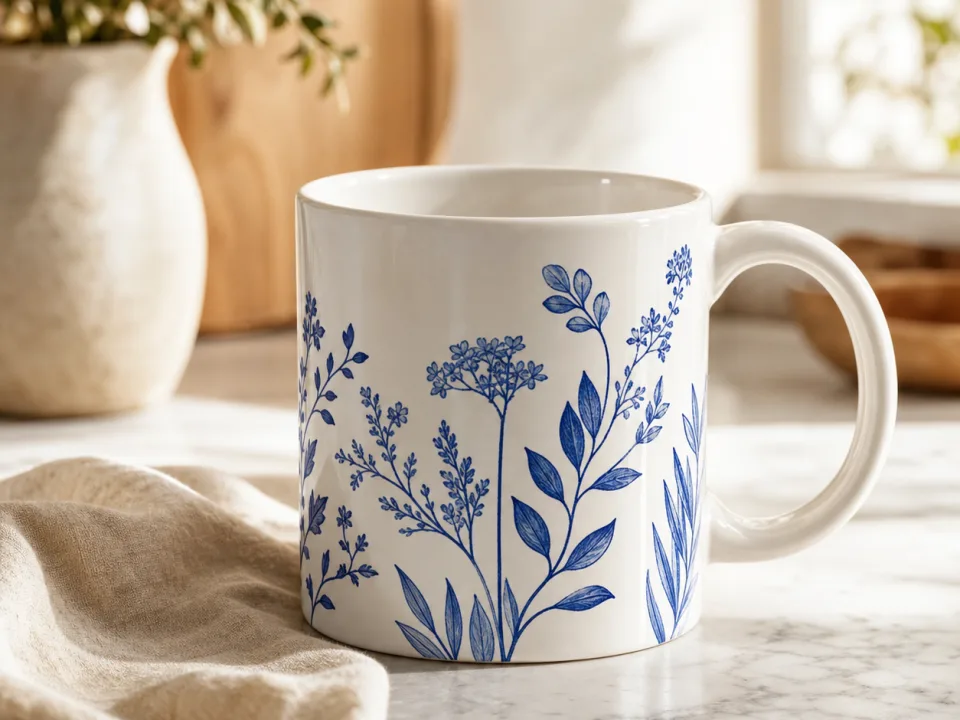
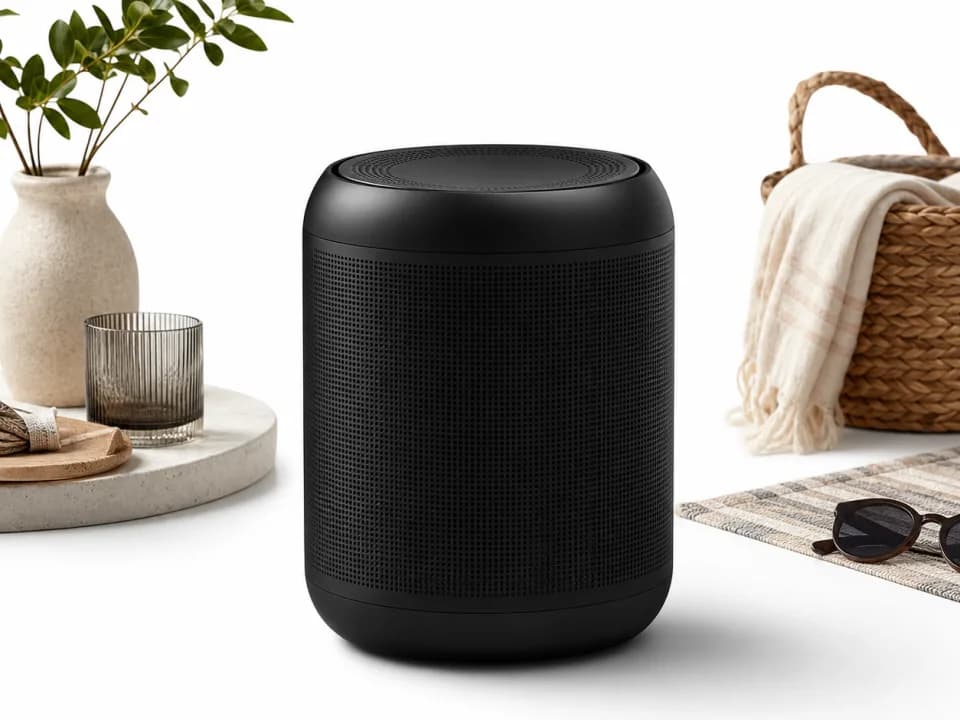
For physical products that means clean, well-lit shots that show scale and context. For digital products there is no physical item to photograph, so the mockup is the product photo, and a bare JPEG loses to the same design shown framed on a wall, printed on a mug, or worn. That is what our product mockup generator produces: upload the design, pick a product and scene, and get a photorealistic listing image without a Photoshop template. For wall art, the framed poster mockup stages the print in a room; for sticker shops, the sticker design tool outputs clean transparent-background art ready for a sheet.
Try it now
Free to try, no account needed Example output
Your generated image will replace this example.
If you are still deciding what to list, our guide to digital products that actually move on Etsy covers the categories with real demand, and the walkthrough on how to sell digital downloads on Etsy covers the listing mechanics end to end. For the images specifically, how to make product mockups for free compares every route. And if you want the same SEO discipline applied to physical goods without holding stock, running an AI print-on-demand store uses the identical title, tag, and listing-image playbook.
Do you need an Etsy SEO tool?
"Etsy SEO tool" gets searched almost as often as "Etsy SEO" itself, so the honest answer matters. Third-party tools like eRank and Marmalead do real work: they pull search-volume estimates and competition data for keyword phrases, which speeds up the research that Etsy's own fields do not show you. That is genuinely useful for finding the phrases buyers type. What no tool can do is change the ranking factors, which Etsy publishes and which come down to relevant keywords, a complete listing, competitive shipping, and images that earn clicks. A tool helps you pick better keywords faster; it is not a requirement, and it is not a shortcut around building a listing that converts. Start with Etsy's own Ultimate Guide to Etsy Search, get the fundamentals right, and add a keyword tool only once you are optimizing at volume.