
Guides
AI Influencer Marketing: How Brands Use Virtual Personas (2026)
Learn why brands build reusable virtual personas, where AI influencers fit into campaigns, and how to handle FTC disclosure and responsible deployment.
AI influencer marketing means two different things, and conflating them is why the topic feels confusing. The first is using AI tools to run campaigns with human influencers (matching, briefing, analytics). The second, and the one this guide is about, is a brand launching its own AI-generated persona: a fictional spokesperson the brand owns and controls, who appears across every ad and post with the same face and the same voice. That second version is where the durable advantage for brands is, and also where the real limits and legal duties live. Here is how it works, why brands do it, what it cannot do, and how to start responsibly.
What AI influencer marketing means in 2026
Split the term cleanly before spending on it.
- AI tools for human-influencer campaigns. Software that finds creators, drafts briefs, predicts performance, and reports on results. The influencer is still a real person; AI is just the back office. Useful, but it is a workflow upgrade, not a new asset.
- Brand-owned virtual personas. A character the brand creates and controls, whose images are AI-generated and whose identity stays fixed across everything it appears in. This is a durable brand asset, closer to a mascot with a photorealistic face than to an ad campaign.
The rest of this guide is about the second one, because it is the version that changes what a brand can produce and the version with the sharper trade-offs. For the broader cultural background on the personas themselves, see our explainer on virtual influencers.
Why brands use virtual personas
The pitch is not novelty; it is control and unit economics. A brand-owned persona gives you four things a human spokesperson cannot.
- Cost control. No shoots, no travel, no location fees, no reshoots when a detail changes. A new scene is a generation, not a production day.
- Consistency. The same face and identity appear in every asset, so a campaign looks like one coherent character rather than a rotating cast, and that consistency compounds into recognition.
- Availability. The character is always on brief and always available. There is no scheduling, no calendar conflict, and no career that moves on.
- Message control. Every post, caption, and reply can be planned to fit brand voice, with none of the reputational risk that comes from a human partner's separate life and opinions.
This is why luxury and consumer brands have run campaigns with established virtual personas: it is a way to keep messaging tight and costs predictable while producing a high volume of on-brand imagery. The version that pays off for most brands, though, is not renting someone else's character. It is owning one.





The reusable fictional spokesperson
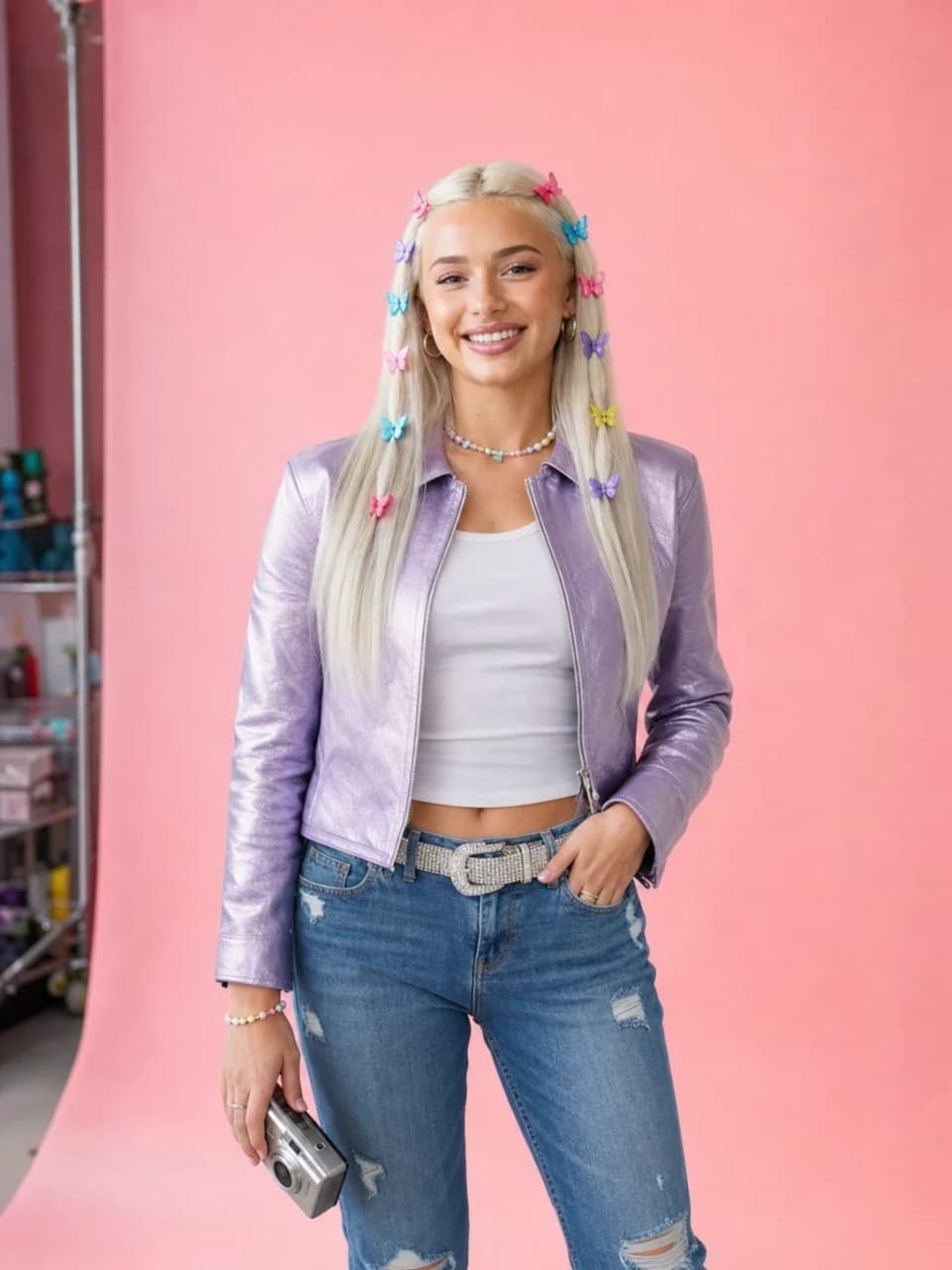
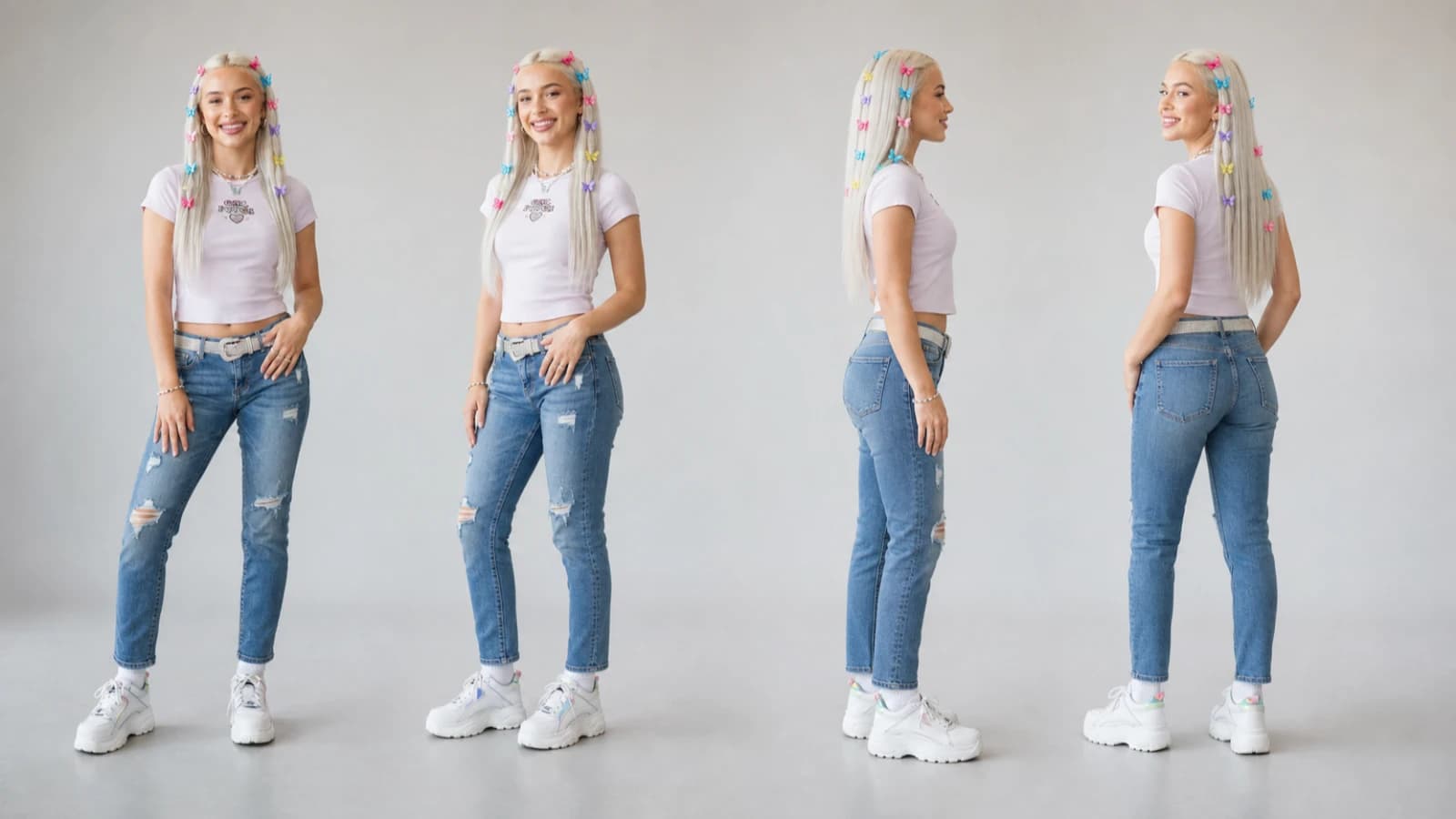
The real wedge for brands is a reusable fictional spokesperson: one original character, with a stable face and a stable voice, that you use across every asset. Think of it as a mascot for the AI era, except photorealistic and infinitely posable. Once the character exists, every ad variant, product shot, social post, and reply is the same recognizable person, which is exactly the accumulated-character-state that a one-off prompt or a trained face model cannot give you.
The two halves matter equally. A stable face without a stable voice gives you consistent pictures with inconsistent personality; a voice without a locked face gives you a character who looks like a different person every week. You need both fixed to build recognition, and you need them to be reusable so the cost of the tenth asset is far lower than the first.
This is where Dream Pixel Forge fits for a brand. You author an original persona once: describe or interview the character into being, approve a character sheet that locks its face as the identity anchor, and define a structured personality (tone, niche, backstory, catchphrases, topics to avoid) that becomes its voice. From then on, every image renders that same locked character, captions are written in the persona's voice with platform-specific variants for Instagram, TikTok, and X, and a persistent chat lets your team develop and pressure-test the character before it ships. Each persona also records a likeness basis at creation, which is the compliance step covered below. It produces stills and copy, not video, so it covers the image-and-text spine of a campaign rather than talking-head clips. The consistency engine underneath is the same one described in our guide to consistent character AI.
The limits, and the rules
An honest brief has to name what a virtual persona cannot do, because the failure modes here are legal, not just creative.
- Authenticity skepticism. Audiences discount a spokesperson they know is synthetic. A virtual persona is good for brand-controlled storytelling and product presentation; it is weak for the "a real person tried this and loved it" job, which is the whole point of human word-of-mouth.
- Disclosure is required. Instagram, TikTok, YouTube, and Meta's ad tools all require realistic AI content to be labeled, and the EU AI Act's transparency obligations for AI-generated content are scheduled to apply in 2026. Plan to disclose from day one; label the persona as AI in bio and captions.
- No fake testimonials, by law. The FTC's final rule on consumer reviews and testimonials took effect on October 21, 2024, and it bans fake and AI-generated reviews and testimonials that misrepresent the reviewer's identity, experience, or existence, including fake endorsements. A fictional AI persona has not personally used your product and cannot honestly claim to, so a virtual spokesperson must present as brand-authored marketing, never as an independent customer review or first-hand endorsement. This is the single most important line for brands to hold.
None of this rules out virtual personas; it defines the lane. Use them for owned, clearly-branded storytelling and product imagery, and keep them out of the review, testimonial, and independent-endorsement slots that the FTC now polices.
Likeness rights and attestation
Before a persona ships, a brand needs a clear answer to one question: whose likeness is this? There are three defensible bases, and each is fine if you can attest to it honestly.
- An original synthetic character that does not depict any real person. The lowest-risk option, and the default for most brand personas.
- An authorized real person's likeness, used with written permission (a founder, a contracted model, a spokesperson who has signed off).
- Your own likeness, if the persona is a version of you.
The one thing you cannot do is use a real person's face or name without their permission; right-of-publicity claims are expanding, not shrinking. Dream Pixel Forge builds this into creation by requiring you to declare a likeness basis (synthetic, authorized, or your own) for every persona, recorded with the account and timestamp, so the riskiest decision is made explicitly rather than by accident. Treat that attestation as a required line item in your persona brief, not a formality.
How to start
A brand can stand up its first persona in four steps.
- Write a persona brief. Who is this character, what does the brand want them to stand for, what niche and tone, and (critically) what is the likeness basis. Settle the compliance questions here, on paper.
- Lock the identity. Produce and approve a character sheet so the face is fixed before you generate a single ad. Everything inherits from it.
- Define the voice. Give the persona a structured personality so captions and replies are consistent and on-brand, not improvised per post.
- Build a content system. Generate assets against the locked identity, caption each post in voice per platform, disclose the persona as AI, and keep it out of testimonial territory.




For the mechanics of steps two and three, our step-by-step on how to create an AI influencer walks the exact flow, and AI Instagram models shows what a running persona account looks like in practice. Start with a synthetic character, get the sheet right, and treat disclosure and attestation as features of the brief, not afterthoughts.